
🔴 The Mod Everyone Buys and Almost Nobody Needs
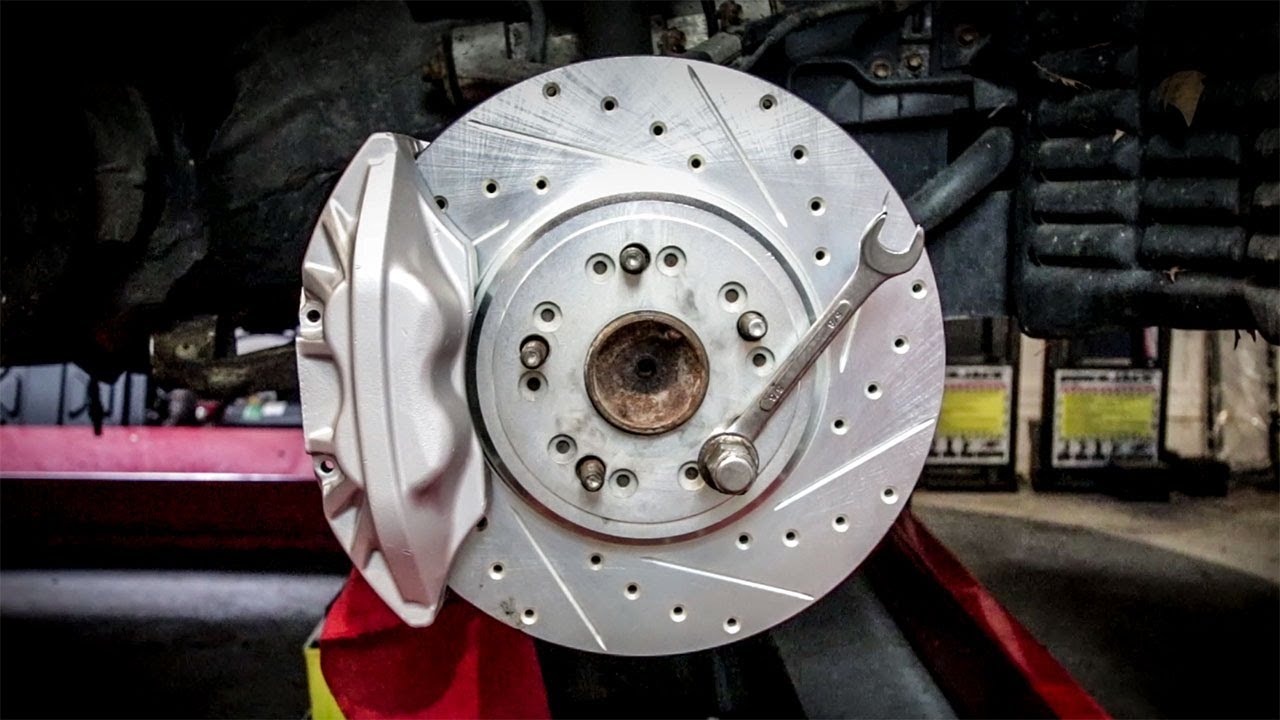
Walk through any car meet parking lot and count the wheels wrapped around a giant red, yellow, or gold caliper stamped with a big brand name. It's one of the most common upgrades in the entire hobby, right up there with lowering springs and a cold air intake. It's also one of the most misunderstood.
Ask the owner why they bought it and you'll usually get some version of "for better stopping power." Ask a braking engineer the same question and they'll tell you something uncomfortable: in the vast majority of street cars, the factory brakes were never the limiting factor. The tires were. The driver's reaction time was. The car's weight transfer geometry was. A four-piston caliper wrapped around a bigger rotor doesn't fix any of that.
This isn't a takedown of big brake kits. Some cars and some drivers genuinely need one, and when they do, nothing else on the market solves the same problem. But the gap between what a BBK is marketed to do and what it actually does is one of the widest in the entire modding world, and it's worth understanding before you drop $2,000 to $6,000 on a set.
🧮 What Actually Stops a Car (Hint: It's Not the Brakes)
Here's the physics that gets skipped in every forum thread about "upgrading my stopping power."
A car stops because friction between four contact patches of rubber and the road converts kinetic energy into heat. The brakes don't stop the car. The tires stop the car. The brake system's only job is to slow the wheel's rotation fast enough that the tire can do its job without locking up and skidding, which is actually worse for stopping distance, not better.
This is why every credible stopping-distance test (Car and Driver, Motor Trend, and independent tire reviewers have run this comparison dozens of times) shows the same result: swap a set of all-season tires for a good set of summer performance tires on an otherwise stock car, and 60-to-0 stopping distance drops by 10 to 20 feet. Bolt on a big brake kit with the stock tires still on the car, and stopping distance from a single hard stop barely moves, sometimes by a foot or two, sometimes not at all.
The factory brake system on almost every modern car, even an economy sedan, is designed with a huge margin of stopping power beyond what the tires can actually put down. Automakers have to engineer for worst-case tire grip (wet roads, cheap OEM tires, an aging owner who never rotates them) and legal stopping-distance requirements. That means the brake pedal has more raw clamping force behind it than the contact patch can use in a single stop, almost all the time.
So if a single hard stop from highway speed isn't where stock brakes fall short, where do they actually fall short? That's where the real conversation about big brake kits should start, and it's a much narrower one than "better stopping power."
🔥 The Real Problem BBKs Solve: Heat, Not Force
The honest case for a big brake kit isn't about the first stop. It's about the fifteenth stop in a row.
Brake fade happens when repeated hard braking heats the pads, rotors, and fluid faster than they can shed that heat back into the air. Push a small factory rotor and a two-piston caliper through ten hot laps at a track day, or ten hard stops down a twisty mountain road in a heavy SUV, and the system can't dissipate heat fast enough. The pads glaze over, the fluid can start to boil, and stopping power falls off a cliff, sometimes fading to almost nothing right when you need it most.
A bigger rotor has more thermal mass to absorb heat and more surface area to shed it. A bigger caliper, especially a multi-piston fixed design, clamps more evenly across the pad and often runs cooler than a stock sliding single-piston caliper under sustained abuse. That's the actual engineering win: thermal capacity and consistency under repeated hard use, not one-time stopping force.
This is why the drivers who legitimately benefit from a BBK share a specific profile:
- Track day and autocross regulars who put the brakes through repeated hard stops in a single session, where heat builds cumulatively lap after lap.
- Owners of heavy, powerful cars (big SUVs, trucks with a trailer, high-horsepower builds that can reach speed fast enough that the stock brakes have to work harder every single time to scrub it off).
- Mountain and canyon drivers who ride the brakes on long descents, generating sustained heat rather than a single spike.
- Anyone who's already experienced fade and knows exactly what a soft, sinking pedal feels like mid-session.
If none of that describes your driving, the honest answer is that your factory brakes were probably already capable of more than your tires and your reaction time. That's not the answer the mod-list threads want to hear, but it's the one backed by actual test data.
🛞 The Part Nobody Mods First: Tires
Here's the sequence that would actually make most cars stop shorter, in order of how much it actually matters:
- Tires. A grippier compound and a tread pattern matched to your climate does more for stopping distance than almost anything else you can buy. This is genuinely the highest-ROI brake mod that isn't a brake mod at all.
- Pads and fluid. A track-oriented or high-performance street pad compound paired with a higher boiling point brake fluid solves most of the fade problem for a fraction of the cost of a full kit, often under $300 total. This is the upgrade path most experienced track day drivers actually take before ever touching calipers.
- Stainless steel brake lines. Rubber factory lines expand slightly under pressure, which softens pedal feel over repeated hard stops. Stainless lines fix that firmness for well under $150.
- Rotors, if the stock ones are undersized or warping under heat. Slotted or cross-drilled rotors help shed gas and debris and can look better, but a properly sized stock-style rotor in a quality compound does most of the real work.
- The actual caliper and rotor upgrade, which is where a true big brake kit lives, and which matters most when the other four steps aren't enough anymore, usually because of genuinely repeated, sustained hard use.
Most street cars never get past step 2 needing an upgrade. The kits sell anyway because a big red caliper peeking through a spoke is one of the most visually satisfying mods in the entire hobby, and that's a completely legitimate reason to buy one. It's just not the same reason the marketing copy leads with.
⚖️ The Tradeoffs Nobody Mentions in the Sales Pitch
A big brake kit isn't just a straightforward upgrade with no downside. There are real tradeoffs that rarely make it into the forum hype thread:
- Unsprung weight. Bigger calipers and rotors add rotating mass at the corner of the car, which can hurt ride quality and, in some cases, actually slow down acceleration and handling response more than the braking gain helps.
- Wheel fitment. A serious BBK often forces an upgrade to larger wheels just to clear the caliper, which cascades into new tire costs, new offsets, and sometimes suspension geometry headaches nobody budgeted for.
- Cold-bite complaints. Some track-focused pad compounds that come stock with aggressive BBKs perform worse than factory pads when cold, meaning your daily commute braking (cold pads, light pressure) can actually feel worse, not better, until the system heats up.
- Squeal and dust. More aggressive compounds are frequently noisier and dustier than OEM pads, a tradeoff plenty of BBK buyers don't discover until after installation.
- Cost-to-benefit for pure street use. At $2,000 to $6,000 installed, a BBK is one of the most expensive mods per unit of real-world benefit if your driving never approaches the conditions that cause fade in the first place.
None of this means big brake kits are a scam or a bad mod. It means they're a specialist tool being sold as a general-purpose upgrade, and car culture has a habit of treating specialist tools like universal wins because they look the part.
🏁 So Should You Buy One?
If you track your car, autocross regularly, drive something heavy and powerful enough to generate real sustained brake heat, or you've personally felt a brake pedal go soft and mushy mid-session, a big brake kit is a legitimate, well-earned upgrade. Buy the kit that matches your actual use case, not the biggest one that fits behind your wheels.
If you drive a stock or mildly modified street car and you've never once experienced fade, spend the money in this order instead: better tires first, then pads and fluid, then stainless lines. You'll stop shorter, more consistently, and for less money than a kit that mostly exists to be looked at through a wheel.
And if you just want the look, that's genuinely fine too. Just call it what it is. A big brake kit bought purely for style is no different from a wing on a front-wheel-drive commuter: it's an aesthetic choice car culture has every right to make, as long as nobody's pretending it's solving a problem the tires were already solving better.
Spota tip: if you're building out your Garage and logging every mod on your build's timeline, a brake upgrade is one of the few mods worth documenting with before-and-after specs (rotor diameter, pad compound, fluid rating), not just a photo. It's the kind of detail other car people in your Clubs will actually ask about.
For more on where enthusiasts put their money and why, check out why cold air intakes are car culture's most argued-about mod and why coilovers are the mod every car guy eventually regrets for two more mods that look better on paper than they perform on the street.
Big brake kits aren't overrated. They're just aimed at a much smaller group of drivers than the marketing wants you to believe you're in.
🧪 How to Actually Tell If You Need One
Most owners never run this test before buying a kit, and it takes ten minutes on a quiet stretch of road (or better, an empty parking lot) to get a real answer instead of a guess.
Find a safe, legal, empty space. From a moderate speed, do five consecutive hard stops back to back with only a few seconds between them, the way you would in a real panic-braking or aggressive-driving scenario, not a single isolated stop. Pay attention to two things: whether the pedal starts to feel longer or softer by the third or fourth stop, and whether you smell that sharp, hot-resin brake odor building up. If the pedal stays firm and consistent through all five, your factory brakes have margin left, and the tires or the driver are still the limiting factor, not the calipers. If the pedal sinks and the smell shows up by stop three, that's early fade, and it's a real signal that your system is being asked to do more than it's built for on a regular basis.
Track day instructors run a version of this test constantly, because it's a far better predictor of what a driver actually needs than any spec sheet. A student who fades on lap two in a mildly driven session probably needs pads and fluid first. A student who's fine for fifteen laps and then starts fading is exactly the profile a big brake kit is built for. Skipping straight to the kit without ever running this test is how a lot of money ends up solving a problem that was never diagnosed in the first place.
💬 What the Forums Get Right (and Wrong)
Car forums have actually had this debate for two decades, and the good threads land closer to the truth than the marketing does. The recurring, accurate points that show up in every serious brake thread: "brakes don't stop the car, tires do," "upgrade pads and fluid before calipers," and "BBKs are for repeated abuse, not single stops." Those have been repeated by enough actual mechanics and driving instructors that they've become close to consensus among people who track their cars seriously.
Where the forums get it wrong is in how that consensus actually spreads. The accurate, unglamorous advice (better tires, better pads, better fluid) doesn't photograph well and doesn't get its own thread with 40 pages of build pics. A shiny six-piston caliper does. That mismatch between what's technically correct and what's socially rewarded is a big part of why the mod persists at the volume it does, independent of how many buyers actually needed it.