
🛑 The Button Every Car Guy Presses First
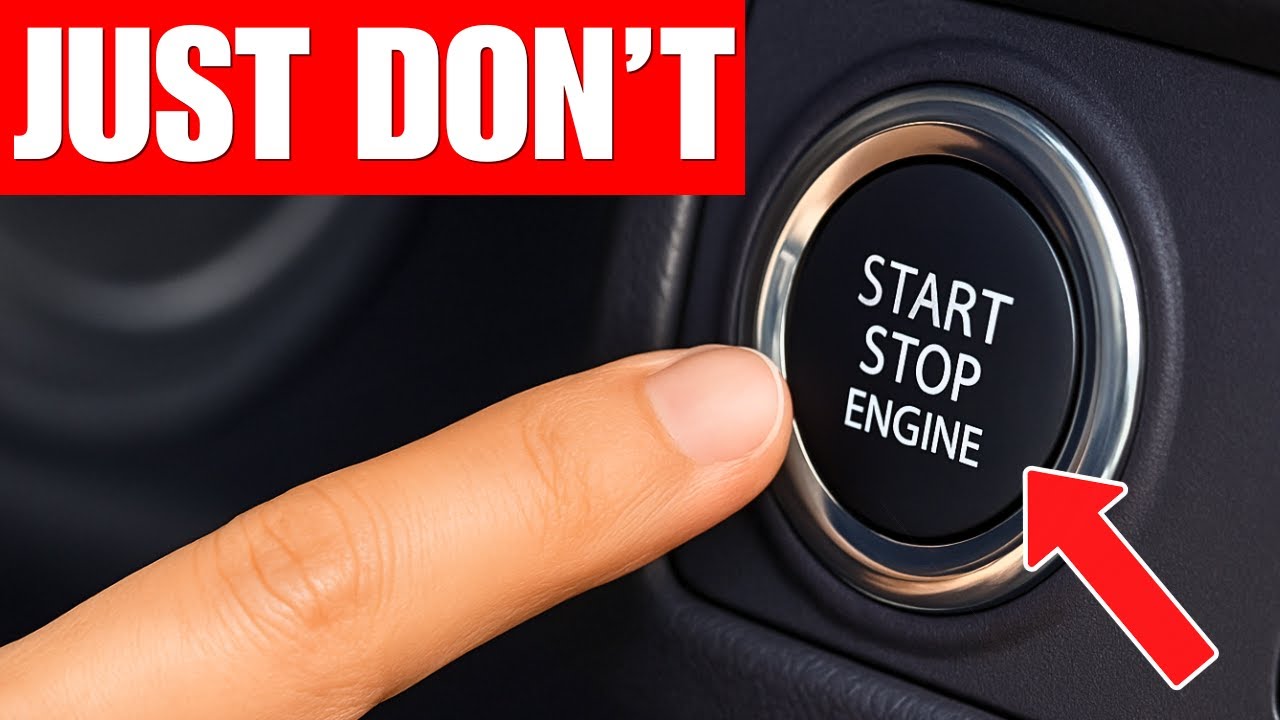
You get in a rental car. Or your buddy's new daily. Or the loaner from the dealership while your car's in for service. Before you even pull out of the lot, you're hunting for one button: the one that kills start-stop.
That little "A" with a circle and slash through it. The one buried in a submenu on some cars, right on the console on others. Car people find it on instinct now, the same way you'd reach for your seatbelt. It's become a reflex, and that reflex tells you everything about how the enthusiast world feels about this technology.
Here's the thing though: start-stop isn't going anywhere. It's not a fad, not a gimmick some engineer dreamed up to annoy you. It's a direct, calculated response to fuel economy regulations that automakers have to hit or pay massive fines for. And the more you understand why it exists and what it's actually doing to your car every time it fires, the more you understand why car guys have such a visceral reaction to it.
This isn't really about the button. It's about control, about trust in your machine, and about a genuine, if often overstated, mechanical concern. Let's get into all three.
⚙️ What Start-Stop Actually Does
The concept is stupidly simple on paper. Your car detects it's stopped, in gear, with your foot on the brake, and cuts the engine entirely. No idling, no fuel burning, no emissions while you sit at a red light. The second you lift off the brake (or in some systems, the moment traffic starts moving ahead of you), the engine fires back up in a fraction of a second and you're moving again like nothing happened.
The core components that make this possible:
- Enhanced starter motor: A beefed-up, higher-durability starter designed to handle tens of thousands of extra start cycles over the car's life instead of the few thousand a normal starter sees
- Deep-cycle AGM battery: Absorbed Glass Mat batteries that can handle the repeated high-current draw of constant restarts without degrading like a standard flooded lead-acid battery would
- Crank position sensors: So the ECU knows exactly where each piston is when the engine stops, letting it fire the correct cylinder immediately on restart instead of guessing
- Integrated starter-generator (on some systems): A combined unit that blends starter and alternator functions for a smoother, faster restart, sometimes fast enough that you genuinely don't feel it
- Brake vacuum reservoir: Keeps your brake booster working even with the engine off, since a dead engine means no vacuum being generated in real time
On a well-engineered system, in a car built around it from the ground up (think most modern hybrids, or a lot of newer BMWs and Mercedes with mild-hybrid setups), the restart is genuinely seamless. You'd barely know it happened if the dash light didn't tell you.
On a cheaper implementation bolted onto an existing platform to hit a fuel economy target? That's where it gets rough. Delayed restarts, a noticeable shudder, a starter that sounds like it's working overtime because it is.
📊 Why It Exists: The Regulation Behind the Button
This is the part that gets lost in the "automakers hate us" narrative. Start-stop isn't really about automakers wanting to annoy drivers. It's about CAFE (Corporate Average Fuel Economy) standards in the US and similar emissions targets in Europe and elsewhere.
The math automakers are working with:
- Every vehicle a manufacturer sells has to count toward a fleet-wide average fuel economy number
- Miss that average across the whole lineup, and the penalties are enormous, we're talking hundreds of millions of dollars across a model year
- Idling time, especially in stop-and-go city driving and testing cycles, counts against that average even though the car isn't moving an inch
- Start-stop can improve fuel economy by roughly 3-10% in city driving cycles specifically, because idling burns fuel for zero distance traveled
That percentage might sound small, but multiply it across every single vehicle a manufacturer sells globally, across every EPA test cycle, and it's the difference between hitting a regulatory target and writing a check that would make your eyes water. Start-stop is one of the cheapest, easiest wins automakers have to hit these numbers without redesigning an entire powertrain.
It's not there to make your driving experience worse. It's there because the alternative, for the manufacturer, is a lot more expensive than an annoyed customer pressing a button every morning.
🔥 The "It'll Wear Out My Engine" Argument
This is the one that actually divides the car community, because it's not pure vibes. There's real engineering debate underneath it.
The concern, in plain terms: every engine start, cold or otherwise, is the single most stressful moment in that engine's operating cycle. Oil pressure hasn't built up yet. Metal-on-metal contact happens for a fraction of a second before oil fully coats every bearing surface. Do that a handful of times a day like a normal car, no big deal. Do it 30, 40, 50+ times in a single stop-and-go commute, and the math starts looking different.
What actually protects the engine on start-stop systems:
- The engine is already warm. This is the single biggest factor people miss. Start-stop only activates once the engine is at operating temperature, meaning oil is already thin, flowing, and ready. That "dry start" wear concern that's very real on a genuinely cold engine is mostly a non-issue here.
- Oil formulated for it. Manufacturers spec start-stop-rated oils (look for "SN Plus" or similar designations) that resist foaming and maintain film strength through rapid, repeated starts specifically.
- Stronger starters designed for the cycle count. These aren't standard-duty starters pushed past their limit. They're engineered and rated for hundreds of thousands of extra cycles from day one.
- Piston position pre-positioning. Many systems stop the engine at a specific crank angle optimized for the fastest, smoothest possible restart, reducing the stress of that first combustion event.
Where the skepticism is legitimate:
- Long-term data on 150,000+ mile start-stop vehicles is still relatively thin compared to the decades of data on conventional systems, because this tech has really only been mainstream for a bit over a decade
- Starter motor replacement, when it does happen, is a real and sometimes expensive repair on cars not originally designed with easy starter access
- Battery replacement costs are meaningfully higher, an AGM battery capable of handling start-stop duty cycles runs significantly more than a standard battery
- In stop-and-go traffic specifically, some owners report hundreds of stop-start cycles in a single commute, which is a genuinely different duty cycle than anything engines were designed around for most of automotive history
The honest answer sits in the middle. Well-engineered start-stop systems on cars designed around them from day one aren't nearly the engine killer the forums make them out to be. Start-stop bolted onto a platform as an afterthought to hit a fuel economy number, with a starter and battery that are the cheapest parts that'll pass validation? That's a different story, and that's usually the car generating the horror stories.
😤 Why Car Guys Turn It Off Anyway
Even setting the mechanical debate aside, there's a purely emotional, purely car-guy reason this technology gets rejected on sight. It comes down to a few things.
The feel of it. Car people are sensitive to vibration, sound, and response in a way most drivers aren't. That split-second lag between lifting off the brake and the engine actually firing back up, even if it's genuinely fast, registers as hesitation. In a car you actually care about driving, that hesitation feels wrong. It breaks the connection between input and response that makes a car feel alive instead of like an appliance.
The sound. A modified exhaust, even a mild one, makes start-stop cycling loud and obnoxious in a way factory mufflers don't. Nobody wants their built car shutting off and restarting with a bark every 30 seconds in traffic.
Control. This one's underrated. Car enthusiasts, more than the average driver, want to feel like they're the ones making decisions about their engine, not the ECU. Start-stop is one more system making a call the driver didn't ask it to make, and that rubs a certain kind of driver the wrong way on principle alone, independent of whether the engineering is sound.
The "why is my car doing this to me" moment. Sitting at a long red light, engine off, and the light turns green while you're still processing that the car shut itself off. That beat of confusion, however small, is enough to make people reach for the disable button permanently.
None of this makes the underlying engineering wrong. It just means the emotional experience of driving a car you love, with an engine that shuts off and restarts on its own schedule, doesn't sit right with people who are already hyper-tuned to how their car feels.
🔧 What Happens When You Disable It
Here's the part a lot of people get wrong: turning off start-stop with the dash button, in almost every car, is a per-drive-cycle setting. It resets the second you turn the car off and back on. That's not automakers being sneaky, it's regulatory. Manufacturers have to demonstrate the technology is active by default to count toward their fuel economy certification, so they can't let you permanently disable it through the factory interface.
That's exactly why an entire aftermarket industry exists around this one button:
- OBD-II programmers and tuners that can permanently disable start-stop at the ECU level on many platforms
- Simple plug-in modules for some vehicles that trick the system into thinking the button's already been pressed on every startup
- Forum-documented workarounds, from fuse pulls to hidden menu settings, that vary wildly by manufacturer and model year
Whether any of that's worth doing depends entirely on your car, your warranty situation, and how much the daily restart cycle actually bothers you. But the fact that a genuine cottage industry exists just to permanently kill one feature tells you how strongly people feel about it.
🚗 The Bigger Picture: This Isn't Going Away
Whatever the enthusiast community thinks, start-stop technology is a permanent fixture of the modern car landscape, and it's only becoming more sophisticated. Mild-hybrid systems are essentially start-stop's evolution, using small electric motors to make the restart genuinely instant and to add a bit of electric assist under load. The technology that feels intrusive today is the foundation of the hybrid and electrified powertrains that are quickly becoming the default across every segment, from economy cars to full-size trucks.
The car guys who hate it aren't wrong to notice it. They're just experiencing the friction point where regulatory pressure meets driving feel, in real time, every single stoplight. That tension, between what a car has to do to exist in the modern market and what actually feels good to drive, is basically the entire story of car culture over the last twenty years. Turbocharging replaced displacement. CVTs replaced manuals in a huge chunk of the market. Start-stop is just the latest chapter, and it probably won't be the last.
If you're the type who notices a half-second restart lag or a slightly rougher idle after 40,000 start-stop cycles, you already know which button you're hitting the moment you get in a new car. That instinct, caring enough to notice the small stuff most drivers never think twice about, is exactly the kind of detail-obsessed mindset that makes someone a real car person instead of just someone who owns a car.
Spota tip: next time you're swapping notes with someone at a meet about which cars have the smoothest start-stop implementation (or the worst), that's the kind of real, lived-in car knowledge worth logging. Drop it in your Garage notes so you've got the receipts next time the debate comes up.
Every generation of car guy has had something to complain about under the hood. This one just happens to announce itself every time you stop at a light.