
🕳️ The Hole That Isn't Actually a Hole
Pop the hood on half the "scooped" cars at your local meet and you'll find the same disappointing secret: sheet metal. Solid, unbroken, painted sheet metal sitting directly underneath a scoop that looks, from ten feet away, like it should be feeding a cold air intake or venting a screaming turbo. It isn't. It's decoration. A plastic or fiberglass bump bolted or glued to a hood that was never cut to let anything through it.
This isn't a rare scam or a shady aftermarket trick, either. It's the default. Most hood scoops sold at parts stores, most scoops that come stock on "sport" trim levels, and most scoops on cars you'll see this weekend are completely non-functional. No airflow. No cooling benefit. No performance purpose whatsoever. They exist purely because they look fast, and for a huge chunk of car culture's history, looking fast has been close enough to the real thing to sell millions of units.
Car people have quietly known this for decades, and yet the fake scoop market has never once slowed down. If anything it's bigger now than it's ever been, with universal bolt-on scoops sold by the pallet on every parts site that exists. So this is the real story: how you tell a functional scoop from a fake one, why the fakes got so popular in the first place, and why, even once you know the truth, car guys keep buying them anyway.
🌬️ What a Real Functional Scoop Is Actually Doing
Before getting into the fakes, it's worth understanding what a scoop is supposed to do, because the real ones are solving genuine engineering problems.
A functional hood scoop exists for one (or more) of three jobs:
- Feeding a cold air intake. The scoop captures ram air (air being forced into an opening by the car's forward motion) and routes it down to the intake, bypassing the hot air trapped in the engine bay. This is the whole point of most WRX, Evo, and rally-inspired hood scoops: they're not decorative, they're literally the intake's air source.
- Cooling an intercooler. Turbocharged cars generate a lot of heat compressing intake air, and an intercooler needs cold air moving through it to do its job. A scoop that dumps ram air directly onto a top-mount intercooler (a hood scoop over a top-mount setup, common on Subarus and Mitsubishis) is doing real thermal work, not styling work.
- Extracting engine bay heat. Some scoops work in reverse: they're vents, not intakes, positioned to let trapped heat escape from a hot spot in the engine bay (headers, turbos, exhaust manifolds) instead of letting it soak into everything around it. These are usually flatter, mesh-covered openings rather than the classic raised "power bulge" shape.
All three of these have one thing in common: there's an actual hole in the hood. The metal (or carbon, or fiberglass) underneath the scoop is cut open, and there's a duct, a shroud, or at minimum an unobstructed path from the scoop opening down into the engine bay. If you can't see daylight, or ductwork, or an intake tube when you look up into a scoop from underneath the hood, it isn't functional. It's trim.
Spota tip: if you're building a Garage entry for a modified car, functional vs. cosmetic scoop is exactly the kind of build detail worth logging. It's the difference between "looks fast" and "is fast," and other car people notice.
📖 A Quick History: Where the Scoop Obsession Actually Started
The hood scoop didn't start as a styling exercise. It started on airplanes.
The NACA duct (named for the National Advisory Committee for Aeronautics, the agency that became NASA) was developed in the 1940s to solve a real aerodynamic problem: aircraft needed to pull cooling air into the fuselage without creating the drag of a raised scoop sticking into the airstream. The solution was a shallow, S-shaped depression molded into the surface that channels air into a duct while staying nearly flush. It's efficient, low-drag, and genuinely functional, and it's why you'll still see the same teardrop-shaped indentation on race cars, supercars, and serious track builds today. When you see a flush, shallow duct on a hood rather than a raised bump, that's almost always a NACA duct doing real work, because nobody bothers molding one for looks alone; it's more expensive to tool than a simple raised scoop and doesn't read as "aggressive" to a casual eye.
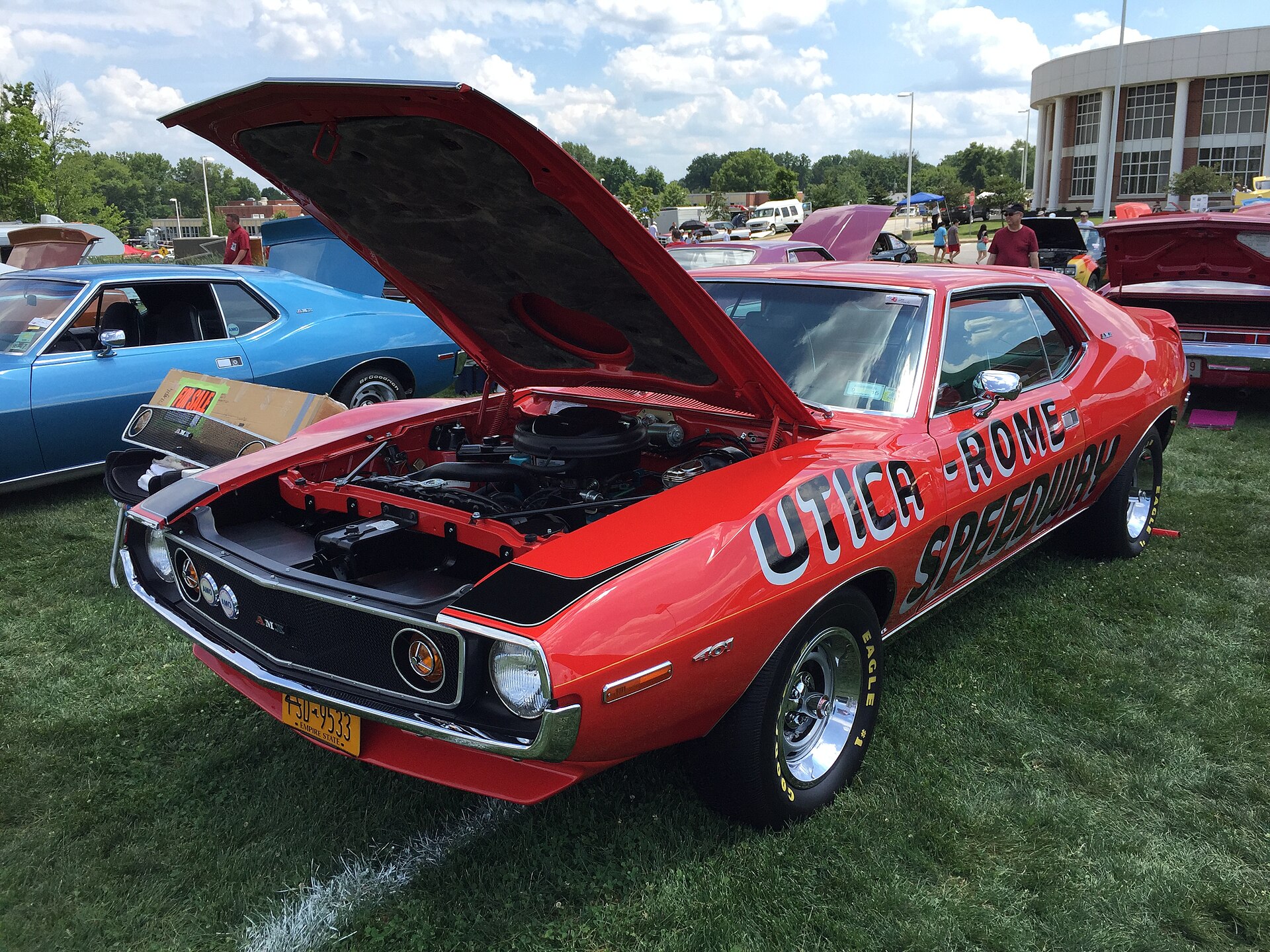
American muscle cars took a very different, much louder path in the 1960s and 70s. Cowl induction hoods (GM's term) and various "Ram Air" packages (Pontiac, Ford) used large, raised hood scoops to pull in denser, cooler air from outside the engine bay's heat-soaked pocket, feeding it straight to a carburetor sitting right underneath. Some of these were genuinely functional, with a flapper valve that opened under wide-open throttle to let outside air in. Others, even in the muscle car era, were partially or entirely cosmetic dress-up options on lower trims, which means the "is it real or fake" argument is almost as old as the hood scoop itself, not some modern aftermarket problem.
Japanese rally homologation cars in the 80s and 90s (the Group A and Group N era that gave us the Subaru Impreza WRX STI and Mitsubishi Lancer Evolution) are where the modern "scoop over a top-mount intercooler" look was born, and on those cars it's almost always functional by necessity: a rally car running flat-out through a stage cannot afford a heat-soaked intercooler, so the scoop is doing genuine, mission-critical thermal work. That's also exactly why so many tuner-culture builds since have chased that specific look. It's not just an aesthetic people liked, it's an aesthetic that was originally earned by cars that needed it to survive.
🎭 How the Fake Scoop Became the Default
If functional scoops solve real problems, why is the market flooded with fakes? A few forces stacked on top of each other.
Manufacturing cost is the biggest one. Cutting a hole in a hood means engineering a duct, sealing it against water intrusion, reinforcing the structure around the opening, and usually adding a filter or screen to keep debris out of the engine bay. That's real R&D and real tooling cost. Molding a hollow plastic bump and bolting it to an uncut hood costs a fraction of that, and from the sales floor, it looks identical.
Manufacturers know styling sells trims. A huge number of factory "performance" trim levels (special editions, sport packages, appearance packages) exist purely to move units at a higher margin without touching the drivetrain. A hood scoop is one of the cheapest, most visually loud ways to signal "this one's the fast one" on a showroom floor, whether or not there's a single extra horsepower under it. Multiple generations of Mustang, Camaro, Charger, and plenty of Japanese and European economy cars have shipped with completely blocked-off scoops on trims that are otherwise mechanically identical to the base model.
The aftermarket followed the same math. Universal bolt-on scoops (glue, double-sided tape, sometimes a couple of self-tapping screws) are some of the highest-margin, lowest-effort parts a shop can carry. They fit almost any hood, require zero cutting, and can be installed in the parking lot in twenty minutes. Compare that to a functional ram-air setup, which usually means hood modification, custom ducting, and actual fitment work. One of these is a Saturday project for a shop that wants repeat business off easy wins. Guess which one gets stocked more.
And crucially: it works. A scoop changes a car's silhouette instantly, and the visual language of "scoop = fast" is so deeply embedded in car culture (rally cars, muscle cars, tuner culture, video games) that most casual observers, and plenty of car people, will clock a scooped hood as more aggressive without ever checking what's underneath it. The fake doesn't need to fool an engineer. It just needs to read as "built" at a glance, in a parking lot, at 20 feet.
🔍 How to Actually Tell the Difference
If you want to know whether a scoop on a car (yours or someone else's) is real, there are a few fast tells.
- Look underneath the hood, not on top of it. This is the only way to know for certain. Pop the hood and look up at the scoop's mounting location from the engine bay side. Real scoop: you'll see a cut opening, usually with a shroud, duct, or intake tubing attached. Fake scoop: you'll see solid, unbroken hood metal or the underside of the same plastic housing you saw from outside.
- Check for a screen or filter. Functional scoops that feed an intake almost always have some kind of debris screen or mesh at the opening, since nobody wants to suck a plastic bag or a rock into their intake tract at highway speed. A totally open, screen-free scoop opening is a strong sign it's just a shell.
- Feel for airflow. With the engine running, you can sometimes feel a faint pressure difference by holding a hand near the scoop opening, though this works best at speed (which obviously isn't a driveway test). It's the least reliable method on this list, but combined with a visual check under the hood, it confirms what you're looking at.
- Research the specific trim. For factory cars, a quick search of "[model] [trim] hood scoop functional" almost always turns up a definitive answer, because enthusiast forums have been documenting exactly this for every generation of every scooped car for twenty-plus years. This is one of the most searched, most argued-about specs in the entire aftermarket and factory-trim world, because so many people have felt burned finding out theirs was fake after the fact.
- Check the material and mounting. Aftermarket bolt-on scoops are almost always ABS plastic or cheap fiberglass, mounted with adhesive tape or a light bead of glue plus a couple of screws around the perimeter. Functional scoops integrated into an aftermarket hood (think APR, Seibon, or OEM rally-homologated hoods) are typically part of the hood's structure itself, not a separate piece stuck on top.
🏁 Why the Fakes Still Sell (Even Once People Know)
Here's the part that trips a lot of newer car guys up: this isn't a secret being kept from buyers. Enthusiast forums, YouTube teardown videos, and even the manufacturers themselves (in fine print or spec sheets) have made it clear for years that a huge share of these scoops don't function. And people still buy them by the millions. That's not ignorance. It's culture.
A hood scoop is a visual signal in the same language as a big wing, a widebody kit, or a set of stretched tires: it's telling other car people (and non-car people) something about the build's identity before a single spec sheet gets pulled up. For a lot of builds, that signal is the entire point. Nobody cross-shopping a Mustang GT vs. a base V6 needs the hood scoop to actually flow air to understand which one the dealership wants them looking at. The scoop is doing marketing, not engineering, and it's doing that job successfully.
There's also a simpler reason: most daily drivers genuinely don't need the functional version. A stock naturally-aspirated engine bay usually isn't heat-soaked enough, and doesn't have an intercooler that needs feeding, so a "real" scoop wouldn't actually change anything meaningful about how the car runs. In that context, buying the cosmetic version isn't getting scammed. It's correctly identifying that the functional version would be solving a problem the car doesn't have.
Where it does matter is on genuinely boosted, heat-soaked builds, especially anything running a top-mount intercooler or an engine bay that's regularly seeing track duty. There, a fake scoop isn't just cosmetically dishonest, it's a missed opportunity: the car actually needs the airflow the scoop is visually promising, and a five-minute look underneath the hood would tell you whether it's actually getting it.
🛠️ If You Want the Real Thing
For anyone building a genuinely functional setup rather than buying a look, the path is straightforward but involves real commitment: either buy a hood specifically engineered with a functional scoop (most reputable aftermarket hood manufacturers state clearly whether their scoop ducts to the intake or intercooler, and typically include the necessary shrouding), or have a hood professionally cut and ducted for your specific intake or intercooler location. This is not a driveway project done with a jigsaw and hope. Improperly sealed hood cuts let water straight onto your engine bay in the rain, and a scoop opening that isn't properly shrouded can actually route hot engine bay air back into your intake instead of cold ram air, which is worse than doing nothing at all.
If you're serious about it, this is a case where paying a shop that specializes in hood modification or buying a hood from a manufacturer who's already solved the ducting and sealing problem is worth every extra dollar over the DIY route.
Real or fake, a scooped hood turns heads at a meet, which makes it exactly the kind of detail worth documenting in a build's Garage timeline. If you're chasing down builds like this in person, Spota's city Playlists route you past the meets and cruise spots where you'll actually find them parked. And if you're curious what a properly functional forced-induction setup looks like end to end, our breakdown of why turbo cars need a cool-down covers the other half of the heat-management story a real scoop is built to solve. For more mod deep-dives like this one, the under-the-hood category has the full archive.
Fake or not, at least now you'll know which one you're looking at.