
🖤 The Black Cloud Heard Round the Internet
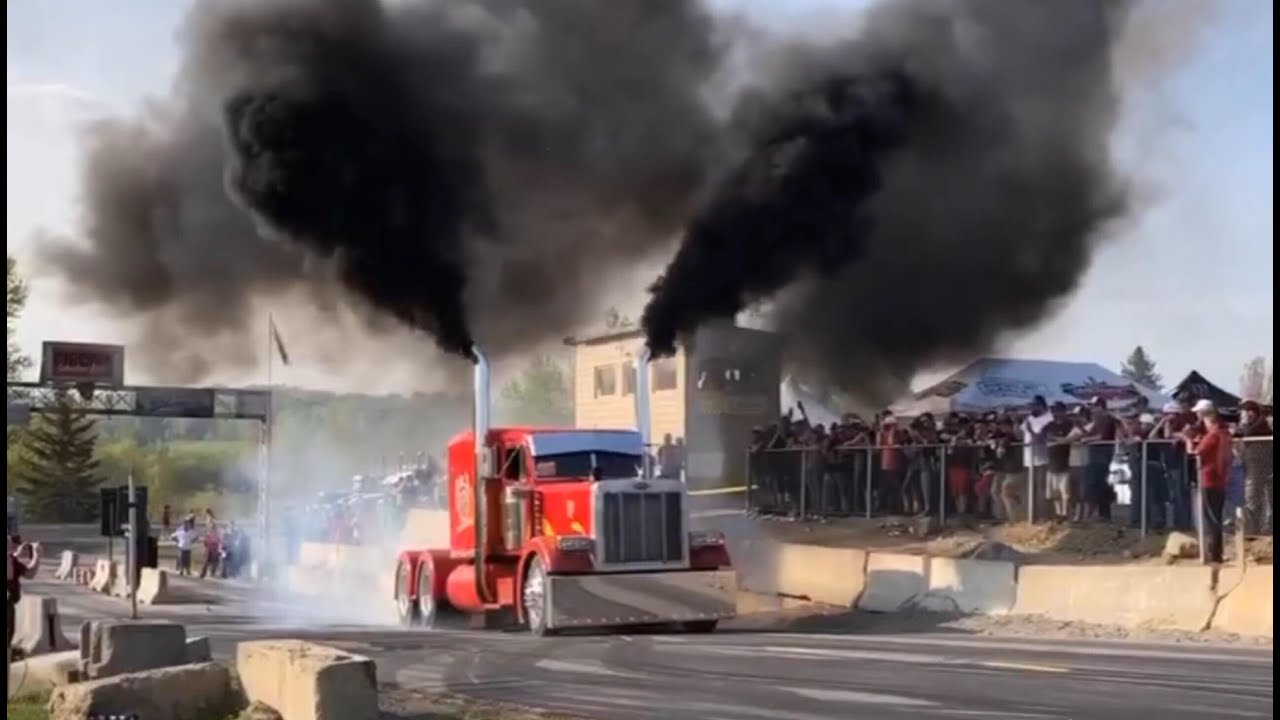
You know the video before you even click it. A lifted Super Duty or a built Cummins pulls up next to a Prius at a light. The driver mashes the throttle. A wall of black smoke rolls out the stack, swallows the intersection, and the comment section splits in half instantly.
Half the world thinks it's the funniest thing a truck can do. The other half thinks it's the dumbest flex in all of car culture, and also, in most places, a crime.
That's rolling coal. And whatever you think of it, it didn't come from nowhere. It has an origin story, a real mechanical explanation, a genuine subculture behind it, and a legal reckoning that's still playing out state by state. Let's get into all of it.
🔧 What's Actually Happening Mechanically
Rolling coal isn't magic and it isn't random. Diesel engines run lean by design, meaning they burn fuel with more air than a gasoline engine typically needs. When you dump extra fuel into that mix without adding more air to match it, the engine can't burn all of it cleanly. The unburned diesel exits the exhaust as thick, black soot, mostly unburned carbon particles.
The two main ways people trigger it on purpose:
- Aftermarket tuners and "smoke switches": Programmers that override the factory fuel maps and dump extra fuel on demand, often wired to a dash-mounted switch built specifically for this
- Deleted emissions systems: Removing the diesel particulate filter (DPF), EGR system, and sometimes the catalytic converter so nothing downstream can clean up the exhaust before it leaves the tailpipe
Stock diesel trucks basically can't do this anymore. Modern emissions controls, especially the DPF, are specifically designed to catch that soot before it becomes a visible cloud. Which is exactly why rolling coal has become inseparable from the "deleted and tuned" diesel scene: you almost can't do it without stripping the very systems the EPA requires.
📜 Where the Trend Actually Came From
Rolling coal didn't start as a random prank. It grew out of diesel truck pull and diesel drag racing culture, where dumping extra fuel briefly is a real (if crude) way to squeeze out extra power for a short burst. Truck pullers have been doing versions of this for decades, mostly as a side effect of chasing performance, not as a statement.
The cultural explosion happened later, roughly the early-to-mid 2010s, when the internet turned it into something else entirely: a visual middle finger. Videos started circulating of trucks specifically targeting Prius drivers, cyclists, and protesters, and the practice picked up a political charge it never fully shook off. What started as a truck-pull side effect became, for a chunk of the diesel scene, a deliberate statement against emissions regulations, environmentalism, and anyone perceived as judging their trucks.
That's the split you still see today. Some diesel owners roll coal purely for the spectacle and the community it built around it. Others do it specifically because they know it'll make someone mad. Both crowds show up at the same truck meets.
⚖️ Why It's Illegal Almost Everywhere Now
Here's the part a lot of people don't realize: rolling coal was never really "legal" in the way people assume, and it's gotten a lot less legal in the years since it went viral.
- Federal law already banned the hardware. The Clean Air Act makes it illegal to tamper with or remove emissions equipment on a vehicle, including the DPF and EGR deletes that make heavy coal-rolling possible. This isn't a new rule; it's been enforceable for decades, just rarely prosecuted at the individual level.
- States started passing coal-rolling-specific laws. New Jersey, Illinois, Colorado, and Maine, among others, passed laws specifically targeting the practice of intentionally emitting excess visible smoke, some with fines that stack per offense.
- EPA enforcement against tuning companies picked up hard. Rather than chasing individual truck owners, the EPA has gone after the companies making delete kits and smoke tunes directly, hitting several aftermarket diesel tuning brands with multi-million dollar settlements.
- Inspection states will fail you for it. In states with emissions testing, a deleted DPF is an automatic fail, full stop, regardless of whether you've ever actually rolled coal.
The honest legal summary: doing it on private property, away from public roads, in a jurisdiction without a specific smoke law, sits in a gray area. Doing it on a public street, aimed at another driver or pedestrian, in most of the country, is a genuine, citable offense, and increasingly one with real teeth behind it.
💸 What It Actually Costs Your Truck
Set the legal risk aside for a second. Rolling coal is also just hard on the engine that's doing it, and diesel guys who've been in the scene a while will tell you the same thing.
- Unburned fuel washes oil off cylinder walls. That excess diesel dumped into the combustion chamber doesn't all burn. Some of it ends up diluting your engine oil, which accelerates wear on rings, bearings, and cylinder walls over time
- Soot buildup fouls injectors and turbos. All that carbon has to go somewhere. Turbo housings and injector tips take the brunt of it, leading to more frequent cleaning or replacement
- Deleted emissions systems tank resale value and invite fines. A deleted truck is worth less to a huge chunk of buyers who don't want the legal exposure, and reinstalling factory emissions equipment correctly isn't cheap
- You're burning fuel for nothing. Every cloud of black smoke is unburned diesel you paid for and got zero performance benefit from. It's not adding power in a meaningful, sustained way; it's just wasted fuel turned into spectacle
None of that stops the scene. If anything, the risk and the cost are part of what makes it feel like a real subculture flex instead of something anyone could casually do.
🤔 Why the Culture War Around It Never Cools Off
Rolling coal sits at the exact intersection where car culture usually gets loudest: performance versus regulation, individual freedom versus shared air, tradition versus the direction the industry is heading. Diesel guys who grew up around truck pulls see it as heritage and horsepower theater. Critics see a public health and environmental violation dressed up as a joke. Both sides have a point, which is exactly why it keeps showing up in comment sections a decade after it went viral.
It's also become a proxy fight for bigger arguments in car culture: EV adoption, tailpipe regulations, right-to-repair, and how much government should dictate what a private vehicle owner can do to a truck they own outright. Rolling coal is a small, visible, easy-to-film symbol of a much bigger argument that isn't going away anytime soon. Related reading: our breakdown of why EV owners and car guys can't agree on anything covers a lot of the same regulatory fault lines from the electric side.
🚙 Spota Tip: Document the Build, Not Just the Stunt
If you're deep in the diesel scene, the truck itself, lift, wheels, exhaust, the actual mod list, is usually way more interesting than the smoke. A Garage profile on Spota is where that story actually lives: the lift kit install, the tune history, the progression from stock to built. It's the difference between a fifteen-second clip that disappears in someone's feed and a build people can actually follow over time. Diesel meets are also exactly the kind of gathering worth capturing through a Photo Op: the trucks lined up, the details, the crowd, not just the moment someone hits the switch.
❓ FAQs
Is rolling coal illegal everywhere?
Not with one single federal ban that covers every scenario, but tampering with emissions equipment is illegal nationwide under the Clean Air Act, and a growing list of states (including New Jersey, Illinois, Colorado, and Maine) have laws specifically targeting intentional excess smoke on public roads.
Can you get pulled over for rolling coal?
Yes, in states with specific smoke laws or general nuisance/emissions statutes, officers can and do cite drivers for it, especially when it's aimed at another vehicle or reported by a witness.
Does rolling coal add horsepower?
Not in any meaningful, sustained way. The extra fuel dump that creates the smoke is mostly unburned and wasted; any brief power bump is minor and comes with real downsides for engine wear and fuel efficiency.
Why do diesel trucks roll coal and gas cars don't?
It comes down to how the engines burn fuel. Diesels run lean and can be tuned to dump extra unburned fuel that shows up as black soot. Gas engines run a tighter air-fuel ratio and don't produce the same visible smoke effect from tuning alone.
Will rolling coal damage my engine?
Repeated coal-rolling contributes to oil dilution, turbo and injector fouling, and accelerated wear over time. It's not an instant engine killer, but it's genuinely harder on the motor than the videos make it look.
Is deleting a diesel's emissions system legal?
No. Removing or disabling the DPF, EGR, or catalytic converter on a vehicle intended for road use violates the federal Clean Air Act, regardless of state-level enforcement differences.
Rolling coal will always be a lightning rod, because it was built to be one. Whether you love the theater or can't stand the smell, it's not going anywhere as long as diesel trucks and internet cameras both exist.