
🐍 "Just LS Swap It"
Ask anything on a car forum. Doesn't matter what. My Miata feels slow. My old truck won't start. My boat needs more torque. Somewhere in the replies, always, is the same four words.
Just LS swap it.
It started as a joke. It is not a joke anymore. The LS swap is one of the most successful engineering memes in automotive history, and it happened because a huge chunk of it is actually true. There is a reason people have dropped LS engines into Miatas, Volvos, Jeeps, boats, motorcycles, riding lawnmowers, and at least one dune buggy that had no business making 500 horsepower.
This isn't really a story about one engine. It's a story about what happens when an engine gets cheap enough, light enough, and supported enough that the entire enthusiast world just decides to standardize around it. Let's get into why.
🏗️ What "LS" Actually Means
The Family, Not Just One Motor
"LS" technically refers to General Motors' third-generation small-block V8 family, introduced in the C5 Corvette in 1997 and built in one form or another for over two decades. That family includes the base LS1, the truck-friendly LS variants (technically Vortec, but swappers lump them in anyway), the LS2, LS3, LS7, LS9, and the supercharged monsters that came out of it.
What ties the whole family together:
- Aluminum or iron block options depending on application, both built on the same basic architecture
- Pushrod design that keeps the physical engine compact despite big displacement
- Consistent bolt patterns and mounting points across most of the family
- A factory power range from "fine" to "absurd," often from the exact same basic block with different internals
That consistency is the whole reason the swap culture exists. You're not chasing one rare engine. You're choosing from an entire family of compatible options depending on your budget and goals.
💰 Reason One: It's Cheap Because It's Everywhere
Millions of Trucks Made It a Junkyard Commodity
GM put LS-family engines in Corvettes, Camaros, Trans Ams, and every full-size truck and SUV they made for two decades. Silverados. Suburbans. Escalades. Tahoes. That's the part people forget when they picture a Corvette engine bay.
Millions of trucks means millions of engines eventually hit junkyards, still running fine, because trucks get scrapped for rust and body damage long before the drivetrain gives up. A truck LS with 150,000 miles on it is often mechanically stronger than it needs to be for a swap project, and it's priced like a used engine, not like a performance part.
Compare that to the alternative. Chasing a rare JDM motor, a specific European engine, or anything low-production means paying import fees, waiting on shipping, and hoping the seller didn't lie about the mileage. The LS supply chain is domestic, enormous, and constantly refreshed by trucks getting totaled or retired.
⚖️ Reason Two: The Power-to-Weight Math Is Absurd
An Iron Block That Weighs Less Than It Should
Here's the part that actually shocked engineers when the LS1 came out. GM built an iron-block V8 that weighed close to what a lot of aluminum V6s weighed at the time. The aluminum LS variants are even lighter, sitting closer to a four-cylinder in curb weight while making V8 power and torque.
That combination, real displacement in a compact, lightweight, pushrod package, is genuinely rare. Most manufacturers trade displacement for weight or weight for complexity. The LS family found a sweet spot that made it physically possible to fit into engine bays that were never designed for a V8.
That's the actual technical reason the Miata LS swap works at all. It's not just "you can cram anything into anything if you try hard enough." The LS is small and light enough that the swap doesn't ruin the car's balance the way stuffing a big iron-block engine from another era would.
🔧 Reason Three: The Aftermarket Solved the Hard Part For You
Wiring Used to Be the Nightmare
Ask anyone who did an engine swap in the 90s what killed the project, and they'll say wiring. Factory harnesses were built to talk to a specific car's computer, immobilizer, transmission, and sensors. Ripping an engine out of a donor car and dropping it into something else meant hours of tracing wires with a multimeter and praying.
The LS swap community solved this collectively, in public, over about two decades. What exists now:
- Standalone harnesses built specifically to run an LS engine with none of the donor car's other electronics
- Off-the-shelf ECU tunes for common configurations, so you're not starting from a blank calibration
- Universal motor mount kits for dozens of popular swap platforms, pre-engineered to the correct geometry
- Header and exhaust kits designed around the specific clearance problems of common swap cars
- Full swap kits from companies that do nothing but package LS swaps for one specific chassis
None of that existed when the LS1 was new. It exists now because enough people did the swap, documented it, sold the parts they designed, and iterated. The "just LS swap it" meme is downstream of a genuine decade of crowdsourced engineering solving the boring, expensive parts of the problem for the next person.
🧠 Reason Four: It Became the Default Comparison Point
Every New Engine Swap Gets Measured Against It
Once something becomes the standard, it changes how every alternative gets evaluated. When someone proposes a Coyote swap, a 2JZ swap, or an LT swap, the conversation almost always includes a comparison to how it stacks up against "just doing an LS," on cost, on weight, on parts availability.
That's a strange kind of dominance. The LS isn't always the objectively best engine for a given swap. A 2JZ might handle more boost. A Coyote might rev higher and sound better. But the LS became the baseline every other option gets measured against, which is its own form of winning the culture war even when it doesn't win the spec sheet.
Spota tip: if you're deep into a swap project, whichever engine you pick, your Garage profile is where the actual build lives. Log the mounts, the harness choices, the tune revisions, and the progress pics as you go instead of trying to remember the order you did things in six months later.
😤 The Purist Backlash Is Its Own Culture
"LS Swap It" Became a Punchline For a Reason
Not everyone loves this. There's a whole strand of car culture built around resenting the LS swap meme, and it's not irrational. Purists have real complaints:
- It erases the character of the original platform. A rotary swapped for an LS is not a rotary car anymore, and some people think that defeats the point of owning one.
- It's become a lazy default. Some swappers reach for an LS because it's easy, not because it's the right engine for that specific build's goals.
- It flattens diversity in the scene. Part of what makes car culture interesting is different engine families doing different things well. A world where everything eventually gets LS swapped is a world with fewer weird, characterful builds.
- The joke got old. "Just LS swap it" as a reply to every single post, including ones that have nothing to do with engines, is exactly the kind of forum humor that stops being funny around the ten-thousandth repetition.
The backlash doesn't disprove the swap's merits. It's evidence of how dominant the meme actually became. You don't get a purist counter-movement against something nobody was doing.
🚤 The Swaps That Prove the Point
It's Not Just Sports Cars Anymore
The LS swap's reach into places that have nothing to do with performance driving is what actually cements it as a cultural phenomenon rather than just a popular mod:
- Boats. Marine LS conversions exist because the power-to-weight math that works in a Miata also works on the water, and parts support means it's serviceable anywhere.
- Off-road builds. Jeeps and trucks get LS swaps for the same reason trucks came with them in the first place: low-end torque and bulletproof reliability under abuse.
- Classic muscle cars. Dropping a modern LS into a first-gen Camaro or an old Chevelle gets you fuel injection, modern reliability, and real power without the vintage big-block's weight and maintenance headaches.
- Literally anything with an engine bay. The riding lawnmower and go-kart LS swaps that show up on social media aren't really about practicality. They're proof of concept, showing off just how far the "it fits, therefore it goes" philosophy can be pushed.
That range, from a Corvette-bred motor ending up in a fishing boat, is the actual story here. Most engine swap trends stay inside one niche. This one jumped every fence in the hobby.
🔩 What It Actually Costs to Do One
The Meme Undersells the Real Work
"Just LS swap it" makes it sound like a weekend project. It usually isn't, unless the platform you're working with already has a mature, documented kit built for it. Budget realistically:
- Engine and transmission: $1,500 to $4,000+ depending on mileage, variant, and whether it comes with accessories and a wiring harness
- Mounts and crossmember: $300 to $800 for a quality kit designed for your specific chassis
- Wiring harness and ECU: $600 to $1,500 for a proper standalone setup, more if you want custom tuning
- Exhaust and headers: $400 to $1,200 depending on how much fabrication your engine bay needs
- Cooling system changes: Often underestimated, radiator, fans, and lines frequently need upgrading to handle the added heat load
- Miscellaneous fabrication and labor: This is where budgets actually blow up if you're paying a shop instead of doing it yourself
A well-planned LS swap on a popular platform with a documented kit can land in the $6,000 to $10,000 range all-in. An improvised swap on an unusual chassis with no existing kit can easily double that. The meme skips all of this. The reality is a real project that rewards research and punishes improvisation.
🧩 The Platforms That Made the Swap Famous
Some Cars Became Synonymous With It
A handful of specific swaps did more to spread the meme than any single YouTube video or forum thread. Understanding which ones, and why, explains a lot about how the culture spread.
- The Miata. No swap is more associated with the LS meme than dropping a V8 into a car famous for weighing almost nothing. The result is a lightweight roadster with a power-to-weight ratio that embarrasses cars costing five times as much, and the sheer contrast between the Miata's reputation and a V8 soundtrack made it an instant internet favorite.
- The Datsun 240Z/280Z. Classic Japanese sports cars with engine bays that turned out to be shockingly well suited to an LS, giving old Z cars a modern powertrain without losing the body that made people want one in the first place.
- The Fox Body Mustang. Ford loyalists doing an LS swap into a Mustang used to start actual arguments at meets. It happens constantly now, mostly because Fox bodies are cheap, plentiful, and were already built around a V8 layout, so the swap is closer to a repower than a redesign.
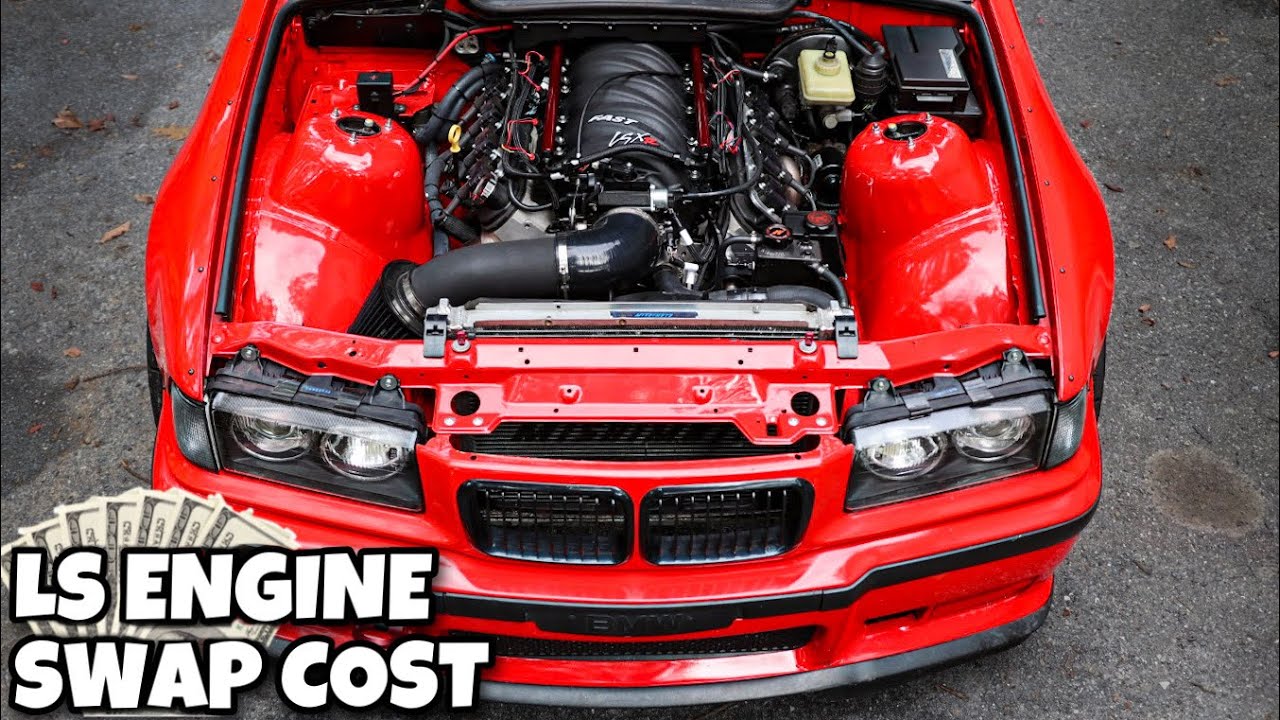
- BMW E30 and E36 chassis. German chassis dynamics paired with American V8 torque became its own respected niche, less about saving money and more about building something genuinely unique that neither BMW nor GM ever offered from the factory.
Each of these platforms had its own small community of early adopters who documented everything, which is exactly the kind of free, public R&D that turned "possible" into "well-supported" for everyone who came after them.
🏁 It Won Because It Actually Delivers
The LS swap became car culture's universal answer for the most unglamorous reason possible: it usually works, it's usually affordable relative to the alternatives, and two decades of people solving the hard parts publicly means you're rarely the first person to try your specific combination.
That's not a meme. That's just what happens when enough people run the same experiment and the results keep coming back positive. The purists aren't wrong that something gets lost when a chassis's original character gets swapped away. But "just LS swap it" earned its place as a punchline the same way any good joke does: by being true often enough to sting.
If you're mid-swap right now, or you're about to start one, that's exactly the kind of build worth documenting properly. Track it in your Garage, log every part and every setback, and when it's running, it becomes a story other car people can actually learn from instead of just another photo of an engine bay with no context.
Check out why every Hellcat owner is on borrowed time for the flip side of this argument, or browse more builds and breakdowns in Under the Hood.