
🛞 The Mod That Starts Fights in Every Parking Lot
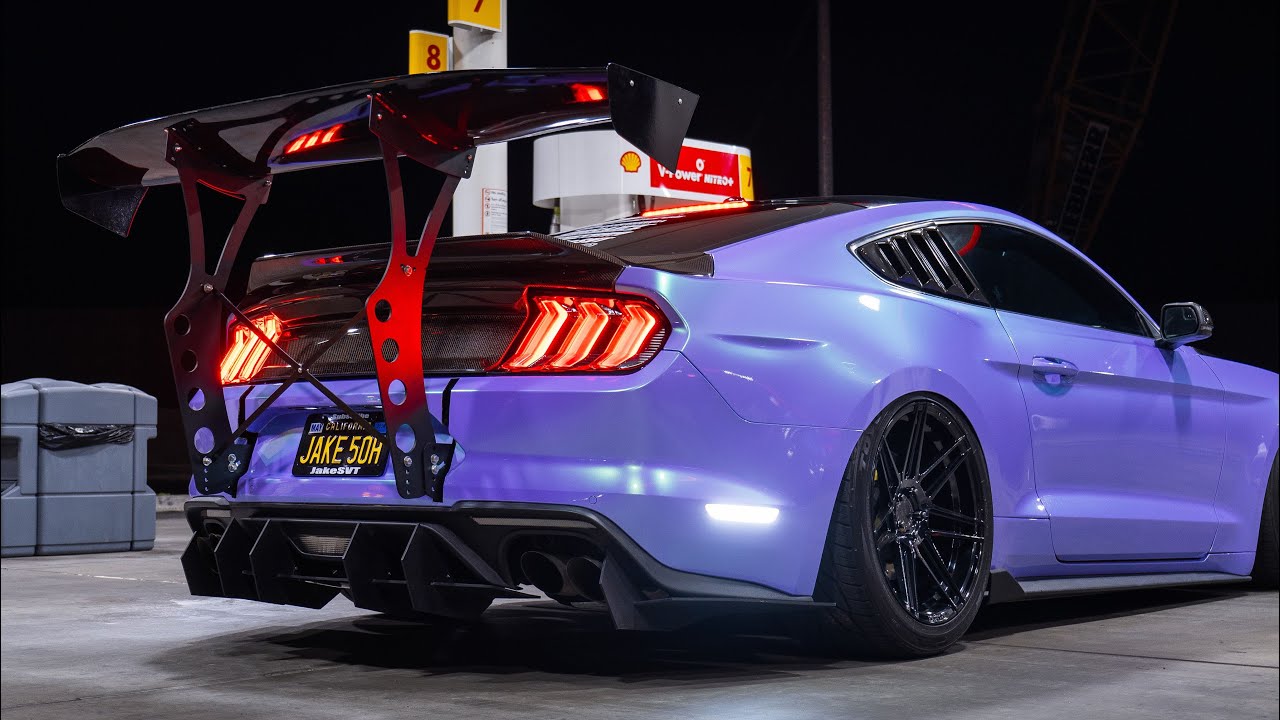
Park a car with a big GT wing next to a group of car people and watch what happens. Half of them nod. The other half start doing math out loud about how fast you'd need to go before that thing does anything at all.
No other mod splits a car meet like a wing does. Coilovers get a pass. Exhausts get a pass, mostly. Wheels get argued about but nobody thinks you're an idiot for buying them. Wings are different. Slap a chunky aftermarket wing on a front-wheel-drive commuter car and you will hear about it, sometimes from strangers.
Here's the thing: the people arguing are usually both a little bit right. Wings absolutely produce real, measurable downforce. And most wings you'll see on the street are doing basically nothing except looking good.
Both of those facts can be true at the same time, and understanding why is the whole key to this debate. So let's actually break down the physics, the history, and why car people keep buying wings anyway even when they know the math doesn't check out.
📐 What a Wing Actually Does (The Real Physics)
Downforce Is Just Inverted Lift
A wing on a car works the same way a wing on a plane works, just flipped. An airplane wing is shaped to generate lift and push the plane up into the sky. A car wing is shaped (and angled) to do the opposite: push the car down into the pavement.
That downward force is called downforce, and it matters because more downforce means:
- More tire contact pressure, which means more available grip
- More confidence at high speed, especially through fast corners
- More stability under braking and load transfer
- Less lift at speed, which keeps the rear planted instead of floaty
The catch is the one word that ruins every parking lot wing argument: speed. Downforce is a function of velocity squared. Double your speed and you don't get double the downforce, you get roughly four times the downforce. That single fact explains almost everything else in this article.
Why Speed Is the Whole Equation
At 30 mph in a parking lot, even a genuinely well-designed wing is producing a trivial amount of downward force, often just a few pounds. It's not nothing, but it's not going to change how the car drives at legal street speeds either.
At 130 mph on a track straight, that same wing might be producing hundreds of pounds of downforce. That's the difference between a car that feels planted through a fast sweeper and one that feels nervous and light.
This is the entire debate in one sentence: a wing that does something real at track speeds is doing almost nothing at the speeds most people actually drive at.
🏁 Why Real Race Wings Look the Way They Do
Angle of Attack Matters More Than Size
A lot of street builds treat wing size as the whole story: bigger wing, more serious car. Real race engineers care way more about angle of attack, meaning how steeply the wing is tilted into the airflow.
- A shallow angle produces less downforce but also less drag
- A steep angle produces more downforce but costs you top speed and fuel efficiency
- Race teams adjust this per track, running less angle at high-speed circuits and more at tight, technical ones
That's why you'll see race cars show up to different tracks with the wing set at a completely different angle. It's not cosmetic. It's a genuine setup decision that trades top speed for cornering grip.
Endplates, Gurney Flaps, and the Details Nobody Copies
The parts of a real race wing that actually separate it from a decoration are usually the boring-looking bits:
- Endplates: the vertical panels on the sides of the wing that stop air from spilling around the tips and killing efficiency
- Gurney flaps: a tiny lip on the trailing edge that can meaningfully boost downforce for almost no drag penalty
- Chord length: the front-to-back depth of the wing element, which affects how much air it's actually working with
- Multi-element designs: some serious aero packages stack two or three wing elements to generate more downforce without needing one absurdly large wing
Most street wings skip all of this. They're a single flat or slightly curved element, mounted at whatever angle looks aggressive, with no endplates doing real work. That's not automatically a problem. It just means the wing's job description changed from "generate downforce" to "look like it generates downforce."
🎭 The Flex Wing Era: When Looking Fast Became the Point
JDM Culture and the Birth of the Statement Wing
A huge amount of wing culture traces back to Japanese tuner culture in the 90s and 2000s, when GT wings on cars like the Supra, RX-7, and Skyline became as much a statement of identity as a functional part. Movies, video games, and grip on the aftermarket parts catalog turned the big rear wing into visual shorthand for "this car is serious."
The problem is that shorthand stuck around long after the context that justified it. A time-attack Supra running a huge wing on slicks at 140 mph genuinely needs that downforce. A clean street Supra doing 15,000 miles a year of commuting does not, but the silhouette says "serious car" either way, and car culture runs heavily on silhouette.
The Wing as Identity, Not Aero
Ask most owners of a big wing why they installed it and you'll get an honest answer eventually: it looks right. It completes the build. It signals what kind of car this is at a glance, the same way a loud exhaust note or a set of deep-lip wheels does.
That's not a dishonest answer, and it's not even a bad one. Car culture has always been partly about signaling. A wing tells other car people what kind of build this is before you've said a word. The mistake is only when someone insists the wing is purely functional on a car that will never see triple-digit speeds on a closed course.
💨 Drag: The Tradeoff Nobody Talks About Enough
Downforce Never Comes Free
Every bit of downward force a wing generates comes with a drag penalty attached. There's no way around this with a basic passive wing: you're pushing a surface into moving air, and that surface resists the air pushing back.
That tradeoff means:
- More wing angle = more downforce, but a real hit to top speed and highway fuel economy
- A wing on a street car that never sees a track is paying a permanent fuel and top-speed tax for downforce it will basically never use
- Drag increases faster than you'd expect at highway speeds specifically, since that's exactly the speed range where drag starts dominating a car's power requirements
This is why serious time attack and endurance teams treat wing angle as a genuine strategic decision, not a "more is more" situation. A wing set too aggressively can actually make a car slower on a fast track by bleeding too much straight-line speed for grip it doesn't need in the corners it's running.
Active Aero: The Expensive Way Around the Tradeoff
Some modern performance cars solve this with active wings that adjust angle automatically, retracting for low drag on the highway and deploying for downforce under hard cornering or braking. It's the correct engineering answer to "downforce costs drag," but it's also expensive, complex, and mostly limited to higher-end performance cars rather than something the average enthusiast bolts on in a weekend.
🧢 Ducktails, Lip Spoilers, and the Subtle End of the Spectrum
Not Every Aero Piece Is a Big Wing
The wing debate tends to swallow the whole conversation, but there's a quieter category of aero mods that gets a lot less flak:
- Ducktail spoilers: small, integrated trunk lips popularized by cars like the 911, providing modest but real downforce with almost no visual drama
- Lip spoilers: subtle additions to a factory trunk or hatch edge, mostly reducing rear lift rather than adding aggressive downforce
- Diffusers: underbody pieces that manage airflow leaving the car, often doing more for stability than a rear wing does, without the visual statement
These pieces get a pass in most car culture circles because they don't read as a costume. Nobody accuses a 911 owner of "fake downforce" over a ducktail, even though the actual aerodynamic contribution is modest at street speeds too. That inconsistency says something honest about the debate: a lot of the hate for big wings isn't really about the physics. It's about the visual statement feeling bigger than the car backing it up.
🧪 How to Actually Tell If a Wing Is Doing Something
If you want to cut through the argument instead of just picking a side, here's what separates a wing that's earning its keep from one that's pure costume:
- Does the car regularly see speeds where downforce matters? Track days, time attack, high-speed touge runs. If the car lives at 35 mph around town, the wing's real job is aesthetic.
- Is the wing properly mounted with real structural support? A wing bolted straight into thin sheet metal without reinforcement isn't transferring load into the chassis the way it needs to, no matter how big it is.
- Does the angle match the intended use? A flat, low-angle setup on a car built for top speed runs makes sense. A steep, aggressive angle on a car that never corners hard is just drag for nothing.
- Is there a wickerbill or gurney flap doing real work, or is it a flat slab? Small details tend to separate genuine aero-focused builds from styling exercises.
None of this makes a purely aesthetic wing a bad choice. It just means the honest framing is "I like how it looks," not "this is generating serious downforce at 40 mph in my daily commute."
🎯 Spota Tip
If you're building out a Garage entry for a car running a big wing, don't just shoot it straight-on. A three-quarter rear angle, low to the ground, is what actually shows off a wing's stance and how it sits relative to the rest of the body. Straight-on shots flatten the whole silhouette that made the wing worth installing in the first place.
🏆 Why the Debate Isn't Actually Going Away
Car culture loves a mod that has a real, defensible engineering case and an emotional, purely visual case at the same time, because it means two completely different types of car people can both justify owning it for different reasons. Wings are maybe the purest example of that split that exists in the entire hobby.
The track guys are right that a properly designed wing at real speed does something measurable. The skeptics are right that most street wings are producing negligible force at the speeds they're actually driven. Neither side is going to convince the other, and that's fine, because the argument itself has become part of what makes wings fun to talk about at a meet.
If you love how a wing looks on your car, that's a completely legitimate reason to run one. Just don't be the guy insisting your civic is making meaningful downforce in the grocery store parking lot. Own the flex. The flex is allowed to just be a flex.
For more on the mods that spark the most arguments in car culture, check out why coilovers are the mod every car guy eventually regrets or browse more debates over in under-the-hood.
❓ FAQs
Do spoilers actually do anything at normal driving speeds?
Not much. Downforce scales with the square of speed, so at typical street speeds (30-70 mph) most wings and spoilers generate only a small amount of downward force. Their real effect shows up at higher speeds, generally track speeds well above 100 mph.
What's the difference between a spoiler and a wing?
A spoiler is typically a flatter piece integrated into the bodywork that mainly disrupts or "spoils" airflow to reduce lift or drag. A wing is a separate airfoil-shaped element mounted on struts above the body, specifically designed to generate active downforce through its shape and angle.
Do wings slow a car down?
Yes, to some degree. Any wing generating downforce also generates drag, since you're pushing a surface into oncoming air. This can reduce top speed and hurt highway fuel economy, which is why race teams treat wing angle as a genuine tradeoff rather than a "bigger is better" decision.
Is it worth putting a wing on a daily-driven car?
If you're doing it for looks, yes, that's a valid reason plenty of car people run wings for. If you're expecting a meaningful handling improvement at street-legal speeds, the physics don't really support it. The functional case for a wing gets much stronger once a car regularly sees track speeds.
Why do JDM cars have such big wings?
A lot of it traces back to 90s and 2000s Japanese tuner and time attack culture, where large GT wings were genuinely functional on cars built for high-speed track use. That look became iconic and carried over into street culture long after the functional justification stopped applying to most builds.
Does wing angle actually matter?
Yes, significantly. A steeper angle of attack produces more downforce but costs more drag and top speed. Race teams adjust wing angle per track, running less angle on high-speed circuits and more on tight, technical ones where cornering grip matters more than top speed.
A wing won't make your commute faster. It might make your build look exactly like what you built it to be. In car culture, that's sometimes the more honest job for a part to do.