

🌧️ "Those Aren't Real Tires"
Post a photo of your car with a set of all-season tires in any enthusiast group chat and someone will say it. Not ask about your horsepower, not comment on your wheels. They'll zoom straight to the sidewall and say some version of "those aren't real tires."
It's one of the most reliable reactions in car culture. Doesn't matter if it's a Miata, a Civic, or a Hellcat. Run all-seasons and somebody's going to let you know you're doing it wrong.
Here's the thing: they're not entirely making it up. There's real physics behind why a dedicated summer tire will out-grip an all-season every single time on dry pavement, and the gap isn't small. But the blanket "all-seasons are trash" take also ignores a huge chunk of reality about how, where, and when most people actually drive their cars.
Let's get into why this argument exists, why it's mostly correct, and why the loudest voices in it are sometimes dead wrong.
🧪 What Actually Makes a Tire "Summer" or "All-Season"
It Comes Down to Rubber Compound, Not Marketing
The tread pattern gets all the attention, but the real difference between a summer tire and an all-season is the rubber compound, specifically how it behaves as temperature drops.
- Summer tires use a softer, stickier compound optimized for a narrow temperature window, generally above 45°F. That softness is what lets the tire's contact patch actually conform to the road surface and generate mechanical and chemical grip.
- All-season tires use a harder, more temperature-stable compound so the tire doesn't turn into a hockey puck when it's 30°F outside, and doesn't melt into soup when it's 100°F.
That compromise compound is the entire reason all-seasons exist, and it's also exactly why they can't match a summer tire's peak grip. A softer compound grips harder but wears faster and goes glassy-hard in the cold. A harder compound survives a wider range of conditions but never grips as hard at any single point in that range. You cannot engineer around this. It's chemistry, not laziness on the manufacturer's part.
The Tread Pattern Difference Matters Too
- Summer tires run minimal siping (those small slits in the tread blocks) and aggressive tread block design built to maximize dry and wet contact patch. Less tread depth variation means less squirm under hard cornering loads.
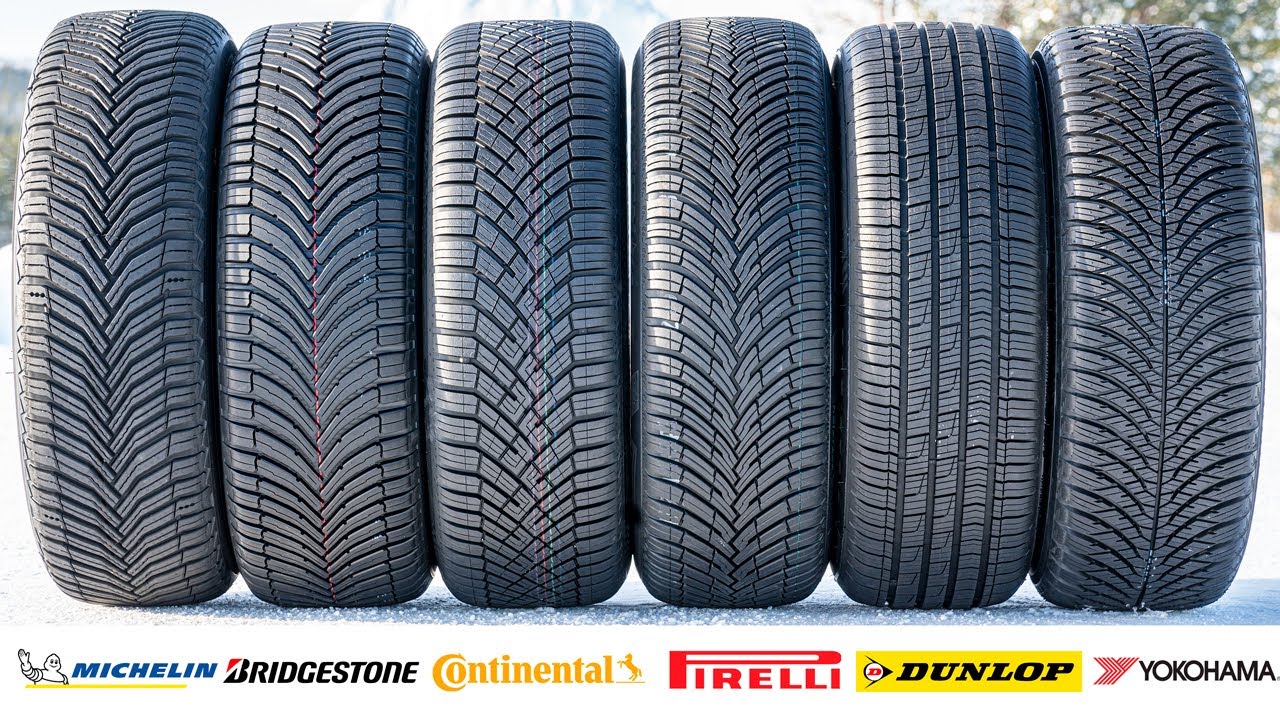
- All-seasons run more siping and a tread pattern designed to bite into light snow and slush, which means more tread block movement under load and a mushier, less precise feel when you're actually pushing.
Put a summer tire and an all-season side by side and the summer tire almost always looks "meaner": wider grooves, more visible tread block, less fussy detail in the pattern. That's not styling. It's a direct visual cue for what each tire is actually optimized to do.
📜 A Quick History: Why All-Seasons Exist At All
All-season tires aren't some recent cost-cutting invention. They showed up in the mid-1970s, and Sears is generally credited with popularizing the first true "all-weather" radial in 1977, marketed as the tire you'd never have to swap for winter. Before that, the standard American driving experience involved literally changing tires twice a year: dedicated summer tires in warm months, dedicated snow tires in cold ones, the same way plenty of serious enthusiasts still do today.
The all-season pitch was convenience, plain and simple. One tire, year-round, no swap appointments, no second set of wheels taking up garage space. It caught on because it solved a real annoyance for the overwhelming majority of drivers who just wanted a car that worked without thinking about it. By the 1980s and 90s, all-seasons had basically become the default tire fitted to new cars off the factory floor in North America, and that's still true today for the vast majority of non-performance trims.
The compromise was baked in from day one. Nobody at Sears was trying to build the best summer tire and the best winter tire glued together. They were building a tire that was "good enough" across the widest range of conditions, and that's exactly the tradeoff enthusiasts are reacting to fifty years later.
🏷️ The M+S Rating Lie Nobody Talks About
Here's a detail that trips up even experienced car guys: that "M+S" (Mud and Snow) stamp molded into the sidewall of almost every all-season tire does not mean the tire is actually snow-rated in any meaningful sense.
The M+S designation is based on tread pattern geometry alone, specifically the void-to-lug ratio. There's no compound testing, no actual ice or snow traction requirement involved. A tire can carry an M+S stamp based purely on how its tread blocks are shaped, regardless of whether the rubber underneath turns rock-hard at 20°F.
The rating that actually means something is the 3-Peak Mountain Snowflake (3PMSF) symbol, a little mountain-with-snowflake icon that requires the tire to pass a real, standardized snow traction test. True winter tires carry it. A growing number of "all-weather" tires (a newer, distinct category from traditional all-seasons) carry it too. Most conventional all-season tires do not.
This matters because a lot of the "my all-seasons were fine in the snow" anecdotes floating around forums are really just "my M+S-rated tire happened to have decent tread geometry," not "my tire was actually engineered for cold-weather grip." It's a real gap between what the sidewall implies and what the tire's compound is doing at 25°F, and it's one of the more legitimate reasons enthusiasts distrust the all-season label.
📉 The Grip Gap Is Real, and It's Bigger Than People Think
This is where the enthusiast hate comes from, and it's earned. Independent tire testing (Tire Rack's own comparative data is the most commonly cited source in enthusiast circles, and it holds up) consistently shows summer tires posting:
- Shorter dry braking distances, often by 10-15 feet from 60 mph compared to a similarly sized all-season
- Meaningfully higher lateral grip in autocross and track testing, frequently translating to multiple seconds a lap on a typical road course
- Faster, more precise steering response, because the stiffer sidewall construction and softer tread compound reduce the delay between input and the tire actually loading up
On a track day or an autocross run, this isn't a marginal difference you have to squint to notice. It's the difference between a car that feels alive under you and a car that feels like it's wearing socks on a hardwood floor. Anyone who's run the same car back to back on all-seasons and then summers knows exactly what that transition feels like, and it's not subtle.
This is also why you'll basically never see a serious track car, an autocross build, or anything actively chasing lap times on anything but a dedicated summer or dedicated track compound tire. The people who actually measure performance for a living have settled this argument completely. If you're wondering why track days became car culture's next obsession, the tires under the car are usually the first thing that changes once someone gets serious about it.
Where the Gap Shows Up Most
Not every driving scenario reveals the difference equally. The grip gap between summer and all-season tires shows up hardest in:
- Hard braking from speed, where a softer compound's ability to conform to the road surface directly shortens stopping distance
- Sustained high-lateral-load cornering, like a decreasing-radius on-ramp taken with intent, where the summer tire's stiffer sidewall construction resists deformation longer
- Wet-weather braking and turn-in, which surprises people since all-seasons are marketed partly on wet performance, but a quality summer tire's tread compound still generally outperforms an all-season in the wet on grip alone, even if the tread pattern is less snow-friendly
- Trail braking into a corner, where the precision and predictability of the tire loading up matters as much as outright grip
Where the gap shrinks the most is straight-line acceleration grip in the dry at moderate power levels, and general low-speed parking-lot maneuvering, situations most daily driving actually consists of. That's a big part of why the argument stays alive: both sides are technically right about different slices of the same car's life.
❄️ Where All-Seasons Actually Win, No Argument
Here's the part of the debate the "real tires only" crowd conveniently skips: all-season tires exist because most cars, most days, are not on a track.
- Daily-driven cars in variable climates. If you live somewhere that sees a real winter but isn't cold enough to justify a dedicated winter tire swap twice a year, an all-season is a legitimate middle ground. A summer tire below 45°F doesn't just grip worse, it can be genuinely dangerous, losing braking and cornering grip dramatically as the compound hardens.
- People who don't want to store a second set of wheels. Not everyone has garage space for a summer/winter setup, and not everyone wants to pay for tire swaps twice a year at a shop.
- Cars that are actually used as daily transportation. A commuter that needs to handle rain, the occasional cold snap, and long highway stretches genuinely benefits from a tire engineered to be competent across a wider range instead of excellent in one narrow band.
- Longevity and cost. All-seasons typically last 50,000-80,000 miles versus 20,000-40,000 for a sticky summer compound. For someone putting real miles on a car, that's not a small consideration.
The people who genuinely need a dedicated summer tire are the ones actively chasing performance: track days, autocross, spirited canyon runs, or anyone who's already invested in coilovers and a big brake kit and doesn't want the tires to be the weak link. If you're running a setup like the kind of aggressive wheel fitment covered here, you've probably already made peace with a shorter tire lifespan in exchange for the grip.
🤔 So Why Does the Hate Run So Deep?
Part of it is legitimate performance snobbery earned through real experience. Once you've felt what a proper summer tire does at the limit, an all-season genuinely does feel disappointing by comparison, and it's fair to want other enthusiasts to know what they're missing.
But a lot of it is also just car culture doing what car culture does: turning a practical engineering trade-off into a status marker. The same instinct that makes people judge a stock exhaust or an automatic transmission shows up here. All-season tires get read as "this person doesn't care enough" even when the actual reason is "this person needs their car to work reliably in February."
There's also a generational-knowledge problem. A lot of newer enthusiasts inherited the "all-seasons bad" take as gospel without ever driving back to back on both, so it becomes repeated wisdom instead of tested wisdom. That's how you end up with someone running a Miata on all-seasons in Phoenix, Arizona getting roasted online by someone who's never had to plan around actual snow.
🧠 How to Actually Decide, Without the Ego
Ignore the group chat and think about what your car is actually for:
- Track days, autocross, or serious canyon driving are the main use case: Get a dedicated summer or max-performance summer tire. There's no substitute, and the grip difference will change how confident you feel at the limit.
- Daily driver in a climate with real winters: Run a proper winter tire in the cold months and swap to summers or all-seasons for the rest of the year. A dedicated winter setup beats an all-season in real snow every time, which is worth knowing if you've been putting off the swap out of convenience. (More on that trade-off in why most car guys refuse to buy winter tires, and why that's often the wrong call.)
- Daily driver in a mild, mostly dry climate: A quality all-season is a genuinely smart, defensible choice. Nobody should feel bad about this one.
- Weekend car that sees occasional spirited driving but also has to survive commuting duty: This is the genuinely gray area, and a grand touring all-season or a summer-leaning all-season is a reasonable compromise most of the time.
Spota tip: if you're logging mod history in your Garage, tire choice is worth tracking alongside the obvious stuff like coilovers and wheels. A tire swap changes how a car actually drives more than most bolt-on mods do, and it's an easy detail to forget six months later when you're trying to remember why the car suddenly felt different on a Photo Op run through the canyons.
🚫 Myths Both Sides Get Wrong
"All-seasons are basically the same as summers now, tire tech has caught up." Tire tech has genuinely improved, and today's best all-seasons are far better than the mushy, wandering all-seasons of the early 2000s. But the compound physics haven't changed. A tire engineered to survive freezing temperatures cannot simultaneously be as soft and sticky as one that only has to survive 90°F pavement. The gap has narrowed in absolute terms as both categories improved, but it hasn't closed.
"You need winter tires to be safe in the snow, all-seasons are basically useless." Also not quite right. A quality all-season with real 3PMSF certification is a meaningful upgrade over a bare M+S all-season and can handle light, occasional snow reasonably well. It's not a substitute for a dedicated winter tire in a place that gets real, sustained winter conditions, but it's not nothing either.
"Running all-seasons means you don't care about your car." This one's just ego. Plenty of enthusiasts run all-seasons on a daily-driven build specifically because they care about the car surviving a pothole-riddled winter commute, and save the summer set for weekends and shows. That's not a lack of commitment, it's just prioritizing differently.
"Summer tires are always worth it if you can afford them." Not if you live somewhere that dips below freezing for months at a time. Running a summer tire compound in genuinely cold weather isn't just "less grippy," it measurably increases stopping distance and reduces cornering grip well below what even a basic all-season would provide in the same conditions. This is a real safety issue, not a preference.
❓ FAQs
Are all-season tires bad for performance cars? Not inherently bad, but they will always underperform a dedicated summer tire in dry grip, braking distance, and cornering limits. Whether that matters depends entirely on how the car is actually driven, daily commuting versus track days changes the calculus completely.
Can I use all-season tires for track days? You can, and plenty of people do for casual, non-competitive track days, but expect noticeably less grip, more tire roll, and slower lap times compared to a dedicated summer or track-compound tire. Most instructors will tell you the tires are the cheapest lap-time upgrade available once you've maxed out driver skill on what you've got.
Do all-season tires wear out faster or slower than summer tires? Slower, usually significantly. All-seasons commonly last 50,000-80,000 miles versus 20,000-40,000 for a sticky summer compound, since the harder rubber compound that hurts peak grip also resists wear better.
Is M+S the same as a winter tire rating? No. M+S is based on tread pattern geometry only and requires no cold-weather traction testing. The 3-Peak Mountain Snowflake (3PMSF) symbol is the rating that actually requires passing a snow traction test, and it's the one that matters for real winter performance.
Do I need separate wheels for a summer/winter tire setup? Not strictly, but almost everyone who does the swap does. A dedicated set of wheels for winter tires means the shop swap is a quick wheel-and-tire changeover instead of dismounting and remounting tires twice a year, which saves money and sidewall wear over time.
What's the best all-around choice if I only want one set of tires? A well-reviewed "grand touring all-season" or "all-weather" tire (the newer 3PMSF-certified category that sits between traditional all-seasons and dedicated winters) is the most defensible single-tire compromise for most daily-driven cars in mixed climates.
🏁 The Real Answer
All-season tires aren't a moral failing. They're an engineering compromise, and compromises exist because most people's driving needs are genuinely mixed. The enthusiast who insists there's only one correct answer is usually optimizing for a use case (max grip, one dry climate, no winter) that doesn't apply to most drivers, including plenty of enthusiasts.
Run summers if you're chasing lap times. Run winters if you actually see snow. Run all-seasons if your car has to be competent in whatever the week throws at it and you don't want to think about it twice a year. None of those choices need anyone else's permission, no matter what the sidewall says.