
🦴 The Cars That Refuse to Look Finished
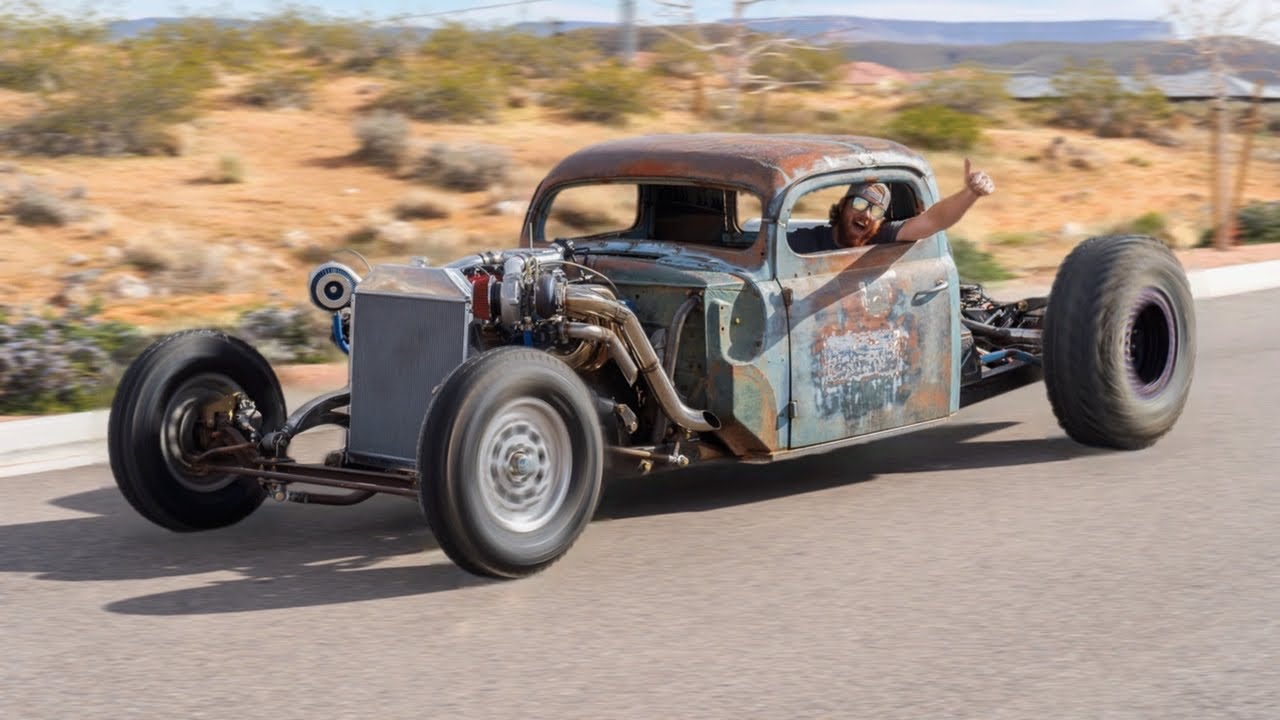
Walk any big car show and somewhere between the mirror-finish Corvettes and the bagged Civics, you'll find it. A truck with more rust than sheet metal. A hot rod with bare, pitted steel where paint should be. Bald tires, a cracked windshield left in on purpose, and a crowd three people deep taking pictures of it like it's the star of the show.
Because it might be.
That's a rat rod, or at least a car wearing patina like it earned it. And in a hobby that spends billions of dollars a year chasing flawless paint and mirror-clear coats, the rise of cars that look deliberately unfinished is one of the strangest, most persistent contradictions in car culture. People are paying real money to make their cars look like nobody's touched them in fifty years.
This isn't a fringe thing anymore either. Patina has its own judging classes at major shows. Auction houses now call out "unrestored" and "original patina" as a selling point, not an apology. Instagram accounts with hundreds of thousands of followers exist purely to post rust. Somewhere along the way, looking rough became a flex.
So what's actually going on here? Why does a hobby built on precision and perfection keep circling back to cars that look like they lost a fight with time? Let's get into it.
🔧 What a Rat Rod Actually Is
Before going further, it's worth separating two things people constantly lump together: rat rods and patina.
A rat rod, in the strict sense, is a specific build philosophy that grew out of traditional hot rodding in the 1990s and 2000s. It's a car (usually a pre-war Ford or a similarly ancient platform) built fast, cheap, and mechanically functional, with zero interest in show-quality bodywork. Think exposed frame rails, straight-pipe exhaust, a bench seat with the stuffing showing, and a coat of primer that was never meant to be the final coat. The whole point is function over form: build something that runs hard and looks like it was welded together in a barn at midnight, because it probably was.
Patina, on the other hand, is broader. It just means original, aged finish: the factory paint that's faded, the surface rust that's crept in over decades, the dents and dings that tell you a car actually lived a life instead of sitting under a cover. A patina car isn't necessarily a rat rod. A numbers-matching '69 Camaro with its original paint worn thin from forty years of Texas sun is patina. So is a barn-find truck nobody's touched since the Carter administration.
Where they overlap is the attitude: both reject the idea that a car has to look new to be worth admiring. That's the actual movement, and it's bigger than either term alone.
🎨 Why Bare Metal Became a Flex
Here's the part that trips people up. A full show-quality paint job, color sand, buff, ceramic coat, ready for a concours field, can run anywhere from $8,000 to well over $50,000 depending on the car and the shop. It takes hundreds of hours. It's genuinely one of the most skilled trades in the entire automotive world.
And yet a huge chunk of car culture looks at that finished product and shrugs, then turns around and loses its mind over a hood with rust bleeding through thirty-year-old primer.
Why?
Because paint is easy to buy. A story isn't. Anyone with enough money can commission a flawless paint job. It doesn't matter if you've owned the car for six months or thirty years, a check clears the same either way. Patina can't be bought like that (or at least, real patina can't). It's proof of time. It says this car has been somewhere, survived something, sat in a field or a garage or a driveway through decades most of its viewers weren't alive for.
In a hobby that's increasingly online, increasingly performative, and increasingly full of trailer queens that never actually drive, an honest, weathered car reads as the opposite of a flex built from a bank account. It reads as authenticity. And authenticity has become one of the scarcest, most valuable things in car culture, right alongside actual horsepower.
There's a practical angle too. A patina car doesn't stress its owner out. Nobody's panicking about a rock chip on a hood that already looks like a topographic map. You can drive it, park it wherever, lean tools against it, let it live like a machine instead of babying it like a museum piece. For a lot of guys who are tired of the anxiety that comes with a $40,000 paint job, that freedom is worth more than the shine.
🕰️ Where This Actually Started
This isn't a new idea dressed up as a trend. Rat rodding traces directly back to the earliest days of hot rodding itself, before chrome and show paint took over the scene.
In the late 1940s and 1950s, when hot rodding was mostly broke teenagers and returning GIs pulling flathead V8s out of junkyards, nobody was paint-and-body perfect. Cars were built to go fast on a shoestring budget: stripped down, lightened, primer gray, whatever ran. That raw, function-first aesthetic is what guys like Ed "Big Daddy" Roth and the early kustom kulture crowd built their entire identity around.
Then the 1980s and 90s happened, and hot rodding got expensive. Billet wheels, candy paint, show-quality everything, the SEMA-style build became the standard people chased. Rodding turned into a rich man's hobby in a lot of people's eyes, and a backlash was inevitable.
That backlash is where the modern rat rod movement was born, deliberately going back to the ugly, unfinished, garage-built roots as a rejection of the polished show-car era. It was punk rock wearing a leaf-spring suspension. The whole point was to build something real with your own two hands out of whatever you could scrounge, and wear the rough edges proudly instead of hiding them.
That DNA is still exactly what's driving the patina movement today, just with a wider audience and a lot more Instagram followers.
💰 The Economics Nobody Talks About
There's a very unglamorous reason patina culture keeps growing: money.
A running, driving project car with original patina can often be bought for a fraction of what an equivalent car with a fresh $30,000 paint job would cost, because the market (rightly or wrongly) discounts unrestored cars compared to restored ones on the surface. But that math flips the moment you factor in what it actually takes to get to that finished paint job.
- Bodywork and paint on a project car frequently costs more than the car itself
- Rust repair before paint can uncover structural issues that balloon a budget fast
- A patina car skips all of it. No paint booth, no color match, no clear coat curing time
- You can drive it the same weekend you buy it, instead of the same year
For a huge portion of car people, especially anyone getting into project cars for the first time, that's the difference between actually owning and driving a car and having a half-finished shell sitting on jack stands for five years (a fate that swallows more project cars than anyone likes to admit).
Insurance plays into it too. A car with a documented, original patina finish is often easier to insure on an agreed-value classic car policy than a heavily modified show build, since there's less custom work for an adjuster to argue about after an accident. It's a small, unglamorous detail, but it's one more reason patina cars end up being the practical choice instead of just the trendy one.
There's also a growing segment of the market that treats real, honest patina as a premium, not a discount. Auction sites have watched unrestored, original-paint cars with real documented history pull higher bids than a comparable car with a repaint, specifically because buyers know exactly what they're getting: no hidden bodywork, no filler, no surprises under a fresh coat. Patina, in that world, is proof instead of a flaw.
🏆 Barn Finds, Survivor Cars, and Preservation Classes
The clearest sign this stopped being a fringe interest is that the judging world caught up to it.
Major shows now run dedicated preservation classes (sometimes called survivor or unrestored classes) specifically so original-paint, original-patina cars can compete without getting torn apart by judges expecting show chrome. The rules are different on purpose: a preservation judge is looking for originality, not perfection. Factory overspray, original tags, unmolested undercarriages, the more untouched, the better the score.
Auction culture leaned into it hard too. "Barn find" went from a niche term collectors used privately to a full content genre, with videos of dust-caked classics getting pulled out of decades of storage racking up millions of views. People don't watch those for the eventual restoration reveal nearly as often as they watch for the find itself: the moment the car is uncovered exactly as time left it.
That's connected to a topic we've dug into before if you want the deeper history: why barn finds send car guys into a frenzy. The short version is the same instinct driving patina culture: the thrill of something real and untouched beats something recreated, no matter how good the recreation is.
The clearest mainstream proof of how far this went: Goodguys, one of the biggest rod and custom show circuits in the country, runs a dedicated unpainted, unfinished-metal category at its events called the Suede Palace. It's not a side exhibit either. It's a full judged class with its own trophies, packed with cars people spent real time and money building to look like they were never finished at all. When one of the largest show organizations in the hobby carves out permanent, top-billing real estate for "deliberately rough," that's not a niche anymore. That's a full segment of the market.
🤬 The Backlash: Why Some Purists Hate It
Not everyone's on board, and the pushback is loud.
The core complaint is straightforward: a lot of "patina" on the market today is fake. As the aesthetic got popular, a cottage industry sprang up around faking it. Chemical rust treatments, weathering kits, artificially distressed primer, even shops that will "age" a brand new paint job to order. Purists see that as everything the original movement was rebelling against: buying an aesthetic instead of earning it.
There's also a safety and mechanical argument that gets raised constantly. Real, uncontrolled rust isn't just cosmetic. It eats frame rails, floor pans, and suspension mounting points, and a car that looks charmingly rough can genuinely be dangerous if the structural rust underneath wasn't inspected and addressed. Old-school rat rod builders will tell you the mechanical side has to be bulletproof precisely because the body isn't hiding anything, but plenty of newer builds skip that part and just chase the look.
And then there's the simplest objection of all: some people just think it looks bad. To a purist who grew up idolizing flawless lacquer paint jobs, a car covered in rust will never read as cool, no matter how good the story behind it is. That tension (form versus authenticity) isn't going away, and honestly it's part of what keeps the conversation alive.
If this kind of never-ending, unresolvable car-guy argument is your thing, it's cut from the same cloth as the debate we broke down in why project cars never get finished: everyone has a strong opinion about what "done" actually means, and nobody agrees.
🛠️ How to Tell Real Patina From Fake
For anyone shopping a patina car or just trying to spot the difference at a show, a few tells separate the real thing from a paid-for imitation:
- Rust in logical places. Real rust follows water and salt exposure: rocker panels, wheel wells, lower doors, trunk floors. Fake patina often gets sprayed evenly across panels that would never actually rust that way in real use.
- Consistent fading with the sun's actual path. Genuine sun-faded paint is worse on horizontal surfaces (hoods, roofs, trunk lids) than vertical ones. Artificial fading is frequently uniform across the whole car.
- Layered history. Real patina shows multiple eras: old touch-up paint, a sticker ghost, mismatched panel colors from a swap decades ago. Fake patina is usually one uniform "look."
- Documentation. A genuinely original car usually comes with some paper trail: old registrations, service stickers, a story that holds up under questions. A staged build usually can't answer "where's this actually been."
- What's underneath. Pop the door jambs, check the trunk seal area, look at bolts and fasteners. Original cars show consistent, matching wear in hidden areas. A repaint or artificial treatment often reveals fresh factory-fit hardware or overspray in spots a real 40-year-old car wouldn't have it.
None of this makes fake patina worthless as a style choice. Plenty of builders openly age a car on purpose as an aesthetic decision, no different than any other custom paint job, and that's fine as long as it's not being sold as something it's not.
🚗 Where This Goes Next
Patina culture isn't slowing down, and it's spreading into places nobody expected a few years ago. Wrap shops now offer faux-rust and faux-patina vinyl finishes for people who want the look without touching real metal. EV conversion builders are starting to drop electric drivetrains into rusted-out classic bodies specifically to keep the exterior story intact while modernizing what's underneath. Even brand-new trucks are getting "distressed" factory finish options from a few manufacturers chasing the trend.
Whatever direction it goes, the core appeal isn't going anywhere: in a hobby that's more photographed, more curated, and more expensive than it's ever been, a car that looks like it's actually lived a life stands out. It's the opposite of algorithm-friendly perfection, and that's exactly the point.
Spota tip: if you're documenting a build (patina, restoration, or anything in between), the Garage is built for exactly this. Log progress pics and mod history over time so the story behind your car is provable, not just claimed. That's the whole difference between real patina and a paint job pretending to be something it's not: a timeline you can actually show.
❓ FAQs
What's the difference between a rat rod and a patina car? A rat rod is a specific, function-first build style rooted in 1990s and 2000s hot rodding: bare metal, primer, minimal bodywork, built to run hard on a small budget. Patina is a broader term for any original, aged finish, whether or not the car is a rat rod. All rat rods have patina; not all patina cars are rat rods.
Is patina bad for a car's value? Not necessarily. Original, well-documented patina can actually add value on a collector car by proving it's unrestored and unmolested. It depends heavily on the car, the model's collector market, and whether buyers in that segment prize originality over show-quality restoration.
Does rust hurt a car's structural safety? Surface rust on body panels is mostly cosmetic. Rust that's reached the frame, floor pans, or suspension mounting points is a real safety issue and needs proper inspection before the car is driven hard or trusted on the road.
Can you fake patina convincingly? Yes, and it's become a whole industry: chemical treatments, weathering kits, and specialty paint techniques can replicate an aged look fairly convincingly. Close inspection of rust placement, fading patterns, and hidden panels usually gives it away.
Why do rat rods skip paint entirely? Traditional rat rod building prioritizes mechanical function and low cost over cosmetics. Skipping paint and bodywork saves significant time and money that goes into the engine, chassis, and drivetrain instead.
Are rat rods legal and safe to drive? Yes, as long as they meet the same safety and equipment requirements as any other vehicle in their state (lights, brakes, mirrors, emissions where applicable). Being unfinished cosmetically doesn't exempt a car from road-legal standards.
Where did rat rod culture originate? It traces back to early hot rodding in the late 1940s and 1950s, then re-emerged in the 1990s and 2000s as a deliberate rejection of the increasingly expensive, show-quality billet-and-candy-paint direction mainstream hot rodding had taken.
A perfect paint job proves you can pay for perfection. A real patina car proves it survived without you. In a hobby obsessed with looking flawless, that's exactly why the rust wins.