
🪑 The Seats That Make No Sense and Everyone Buys Anyway
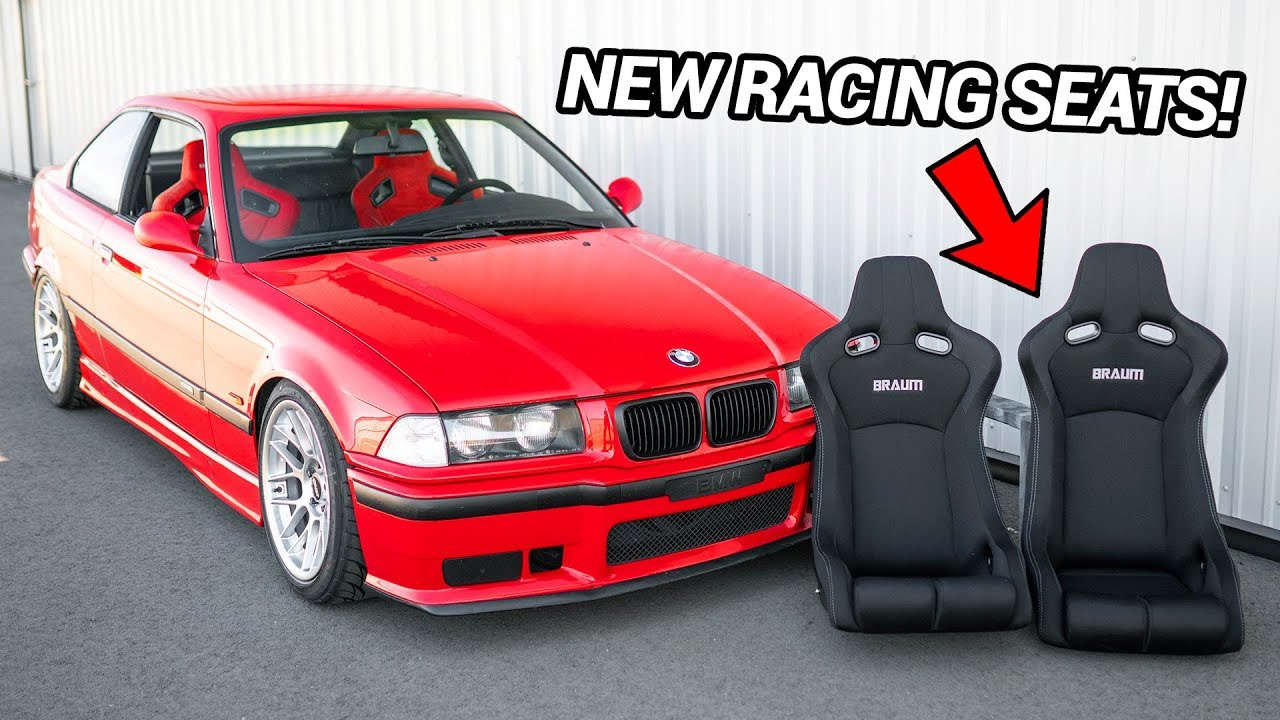
You've seen the build. Stock everything under the hood, maybe a cat-back exhaust and some coilovers, nothing that would embarrass a Camry at a stoplight. Then you open the door and it looks like a time attack car. Bright orange fiberglass buckets, four-point harnesses hanging off a bar bolted behind the headrests, and a driving position so low you practically need a step stool to get in.
That car is never seeing a track day. The owner knows it. Everyone who looks at it knows it. And they bought $900 seats anyway.
This is one of the most universal, least-questioned rituals in car culture. Somewhere between the first mod and the "finished" build (which never actually happens, but that's a different problem), almost every serious enthusiast ends up staring at a pair of Bride, Recaro, or Sparco buckets and thinking: I need those. Not want. Need. Even though the stock seats work fine. Even though the new ones don't recline, don't have heaters, and turn a two-hour highway drive into a lower-back negotiation.
So why does it happen every single time? Turns out it's not really about the seats. It's about what the seats represent, and that story starts on an actual racetrack.
🏁 Where Bucket Seats Actually Came From
Racing seats exist because stock seats are built for comfort across a huge range of body types and driving conditions, and comfort and cornering support are almost always at odds. A factory seat has soft bolsters so it doesn't dig into your hips on a road trip. Those same soft bolsters do nothing when you're pulling real lateral G's, so your body slides across the seat instead of staying planted behind the wheel.
Motorsport solved this decades ago with fixed-back bucket seats: rigid shells (originally fiberglass, later carbon fiber and kevlar composites) molded with aggressive side bolsters that lock your torso and hips in place. No recline mechanism, no adjustable lumbar, often no padding beyond a thin foam layer, because every gram of weight and every moving part is something that can fail or add mass in a race car. FIA-homologated seats (the ones with the little certification sticker and expiration date) go through crash testing most people never think about, which is part of why a real one costs what it costs.
The specific brands that dominate the street scene today, Bride, Recaro, and Sparco, all built their reputations in actual motorsport before they ever became a common street mod. Recaro's been in Formula 1 and rally since the 60s and 70s. Bride grew out of Japanese time attack and grip racing in the 90s, and its fabric patterns (Gracias, Bemix, Gias) became instantly recognizable status symbols in JDM culture, the seat-world equivalent of a logo everyone in the scene can spot from across a parking lot. Sparco's been building seats and harnesses for rally and circuit racing since the late 70s.
None of these companies were building couches. They were building tools for people whose lives depended on staying put in a 100 mph corner. And that's exactly the part car people can't resist.
⚙️ Why They Actually Work (When You're Actually Driving Hard)
Buckets aren't just for looks, even if that's 80% of why most street cars have them. On a genuinely aggressive drive, the difference is real:
- Lateral support. Deep side bolsters keep your torso from sliding during hard cornering, so you're not bracing against the door or the center console with your arm instead of driving with both hands.
- Lower center of gravity. Racing seats typically mount lower and thinner than stock seats, which can lower your actual seated hip point in the car by an inch or more, depending on the mount.
- Weight savings. A stock power seat with motors, heaters, and airbags can weigh 50-60 lbs. A fixed-back composite bucket can weigh 15-20 lbs. Multiply that by two seats and you've dropped real weight, which matters if you're chasing the same power-to-weight obsession that drives half of car culture's other decisions.
- Harness compatibility. Most factory seats aren't designed for a proper 4, 5, or 6-point harness to route correctly. Racing seats usually have dedicated slots for shoulder and sub belts.
If you're doing autocross, track days, or genuinely spirited canyon runs on the regular, that's not marketing copy. It's a real, measurable upgrade to how connected you feel to the car and how long you can hold a hard line through a corner without your body doing half the work.
The problem is that most of the cars wearing these seats aren't doing any of that.
🚗 The Street Car Problem Nobody Talks About
Here's where the whole thing gets a little ridiculous, and most owners will admit it if you push them.
Fixed-back racing seats are genuinely bad daily-driver seats. No recline means no reclining, obviously, which turns road trips into an endurance event. There's often no lumbar adjustment, minimal padding compared to a factory seat, and if the car still has factory door panels and center console, the extra-wide bolsters can make getting in and out feel like folding yourself into a mailbox. Winter jackets don't fit inside the bolsters. Taller or bigger drivers frequently don't fit the shell at all and have to size up or skip buckets entirely.
Then there's the safety conversation nobody likes having. Modern cars are engineered around the factory seat, specifically where it sits relative to the airbags, seatbelt pretensioners, and side curtain systems. Swap in a seat that sits lower, further back, or at a different angle, and you can throw off how those safety systems are supposed to interact with your body in a crash. Most racing seats also don't have integrated headrests built for a stock 3-point belt at highway speed, they're designed to be paired with a harness. Run a fixed-back bucket with just the factory seatbelt and no harness bar, and you've arguably made the car less safe in a rear-end collision, not more.
There's also the money. A legitimate pair of Bride or Recaro seats, brackets, and a harness bar can easily run $1,500-3,000 once you're done, and none of it adds a single horsepower. Resale can take a hit too. Plenty of buyers looking at a used car see aggressive buckets and assume the car's been thrashed, not maintained, even when the opposite is true.
So the practical case against racing seats on a street car is strong. And enthusiasts buy them anyway, in huge numbers, every year. That tells you the real motivation was never really about lap times.
🏆 What The Seats Are Actually Saying
Car culture runs on signaling, whether people admit it or not. A widebody kit says "I'm not afraid to cut metal." A loud exhaust says "I want you to know I'm here." Racing seats say something more specific: this car is serious, and so am I.
Unlike a wrap or a set of wheels, buckets aren't visible from outside the car. You only see them if you open the door or the owner shows you. That's part of the appeal. It's an insider signal, something you flash to other enthusiasts at a meet rather than to random people on the highway. Pop the door at a cars-and-coffee and reveal a set of Bride Zetas with a quick-release steering wheel and a harness bar, and every car person nearby immediately reads it the same way: this person is deep in it.
It also plugs into car culture's obsession with authenticity through hardship. Comfort is what a normal car has. Sacrificing comfort for a small, real performance gain (or even just the aesthetic of one) is a way of proving commitment. It's the same instinct behind manual transmissions refusing to die even though every automatic on the market is objectively faster: the harder, less convenient option reads as more legitimate to the people whose opinion you actually care about.
And there's straightforward brand tribalism underneath all of it. Bride versus Recaro versus Sparco arguments run just as hot in comment sections as import versus domestic or naturally aspirated versus turbo. People don't just buy a seat, they buy an identity inside the hobby, complete with strong opinions about which fabric pattern is "the one" and which brand "sold out" once it got too mainstream.
Spota tip: if a seat swap is the mod that finally makes your build feel like yours, it's worth logging in your Garage timeline, not just Instagram. Progress pics of the shell going in, the harness bar getting welded, the before-and-after of the interior all tell the actual story of the build, not just the finished product.
🎭 The Fake Seat Epidemic (And Why It's Such a Big Deal)
There's a darker side to the brand obsession, and it's a genuine problem inside the community: counterfeit seats.
Because Bride in particular became such a recognizable status symbol, especially the Gracias fabric pattern, a flood of knockoff seats started showing up on AliExpress, eBay, and gray-market import sites for a fraction of the real price. Real Bride buckets, built to FIA specs with certified materials and construction, run well over a thousand dollars each. Counterfeits with the same look show up for $150-300 a pair.
The problem is those fakes usually aren't built to any crash standard at all. Cheap fiberglass or plastic shells, mounting points that weren't stress-tested, brackets that were never designed for the actual car they're being sold for. In a hard impact or even a moderate one, a counterfeit seat can crack, collapse, or detach from its mounts entirely, which turns a mod meant to make you safer in a corner into something that can seriously hurt you.
The enthusiast community has gotten aggressively vocal about this. Forums and comment sections call out fakes on sight (uneven stitching, wrong logo placement, suspiciously light shells), and "is this real" threads with close-up photos are a genre unto themselves. It's become part of the culture's self-policing: buying real ones isn't just about clout, it's treated as a baseline safety responsibility to yourself and anyone else in the car.
🔄 The Compromise Nobody Talks About: Reclining Buckets
Not every enthusiast wants to live with a fixed-back seat full time, and the market noticed. Reclining bucket seats, like the Recaro Pole Position or Sportster CS, or Sparco's Sprint and Evo lines, split the difference: real side bolstering and a lower, more aggressive shape, but with a working recline mechanism and enough padding to survive a road trip.
They're heavier than a full fixed-back racing seat and they don't accept a harness as cleanly, so the die-hard track crowd still reaches for true fixed-back buckets. But for the huge portion of the community building a street car that occasionally sees an autocross lot or a spirited backroad, reclining buckets have become the more common, more honest choice: most of the look and a real chunk of the support, without pretending the car's going wheel-to-wheel racing next weekend.
It's a quieter trend than the Bride-and-harness-bar look that dominates Instagram, but it's arguably the more rational one, which might be exactly why it doesn't get talked about as much. Car culture rewards the dramatic choice, not the sensible one.
🔩 The Bracket Problem Nobody Warns You About
The part that ambushes most first-timers isn't the seat itself. It's everything underneath it.
Every car has a different floor pan, different seat rail spacing, and different factory seating height, which means a bucket seat almost never bolts straight to the factory mounts. You need a car-specific bracket (a "side mount" or "low-down mount") to get the seat sitting at a safe, usable height and angle, and those brackets aren't universal. Popular platforms like the S2000, 86/BRZ, or Miata have a mature aftermarket with dozens of bracket options. Show up with something less common and you might be looking at a custom fabrication job just to get the seat sitting level.
Get the bracket wrong and you end up with the seat sitting too low (your sightline over the dash disappears and your knees end up around your ears) or too high (you lose the entire lowered center of gravity point that was half the reason to buy the seat in the first place). Some owners cut and reinforce the floor pan itself to drop the seat further, which is a legitimate technique in dedicated track builds and a genuinely bad idea on a car you still need to pass inspection and sell someday.
This is also where the "just buy the seat" budget most people start with quietly doubles. Shell, rails, side mounts, and the labor to fit it all properly can easily match or exceed the cost of the seat itself, especially on a less common platform.
🔗 Do You Actually Need the Harness Bar
Walk up to almost any bucket-seat build and there's a good chance you'll find a harness bar bolted in behind the seats, a metal crossbar the shoulder straps of a 4, 5, or 6-point harness route through and anchor to. It's become almost as much a part of the "look" as the seats themselves, but it raises a real question most owners glaze over: are they actually running the harness, or is it just sitting there for the photo?
A harness only does its job if it's mounted and adjusted correctly, at the right angle, with the right hardware, and used every single time you drive, in place of the factory belt, not alongside it as an occasional track-day-only setup. Half the harness bars at any given meet are decorative: bolted in for the aesthetic, rarely if ever actually clipped in on the street, where the factory 3-point belt (designed to work with the factory seat's geometry, not a lowered aftermarket bucket) is still doing the actual restraining.
There's a legitimate, safety-focused version of this setup: full cage or half-cage builds, properly angled harness mounts, and a seat, bracket, and harness combination that's actually been thought through as a system. And there's the much more common version: buckets and a bar because that's what a serious build is supposed to look like. Both exist in huge numbers at every meet in the country. Only one of them is actually safer than stock.
✅ What Actually Matters If You're Buying
If the history and the hardware haven't scared you off, here's what separates a smart buy from an expensive mistake:
- Buy from an authorized dealer, not a marketplace listing that looks too good. A real Bride, Recaro, or Sparco seat comes with documentation and a traceable serial number. If the price is a third of retail, it's almost certainly a counterfeit shell.
- Check the FIA homologation date if you're buying for anything sanctioned. Certified seats expire (usually 10 years from manufacture), and a track day organizer or autocross tech inspector can and will turn you away for an expired shell.
- Price the bracket before you price the seat. Search your exact car and seat model together, not just the seat on its own, to find out whether a direct-fit bracket exists or whether you're looking at custom fab work.
- Sit in it before you commit, if you can. Shell width varies a lot between models, and a seat that's perfect for a narrower driver can be genuinely painful for a bigger one. Buying online off a hype post from someone with a different build is how a lot of buckets end up relisted a month later.
- Decide if you're actually running a harness before you buy the bar. If the honest answer is "probably not, most days," a reclining bucket without the full harness setup is the more consistent, more honest build.
🤔 So Is It Actually Worth It?
If you're doing real track days, autocross, or hard canyon driving on a regular basis: yes, unambiguously. The support, the weight savings, and the harness compatibility are real upgrades that change how the car feels and how long you can drive it hard before fatigue sets in.
If your car is a weekend cruiser that mostly sees cars-and-coffee meets and the occasional backroad, the honest answer is that racing seats are closer to a widebody kit or a big wing than a suspension upgrade: a statement piece more than a performance one. And that's fine. Car culture has never required every mod to make sense on a spreadsheet. Nobody needs painted calipers or a set of forged wheels either. You do it because it makes the car feel like more of a machine and less of an appliance, and because when you open that door at a meet, the right people immediately understand exactly what you were going for.
Just buy the real ones. Your spine, and your safety, will thank you later.